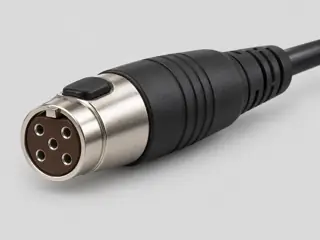
P019 / Audio / Connector form
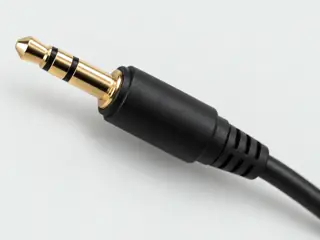
3.5 mm TRS connector
Three contacts do not, by themselves, describe the signal assignment.
- Shape label
- round
- Common aliases
- 3.5mm stereo, aux TRS, headphone TRS
- Reference depth
- Engineering profile →
Family reference
Compare analog and professional-audio connector forms while keeping contact count, channel role, signal assignment and power requirements distinct.
18 forms 18 engineering profiles 10 related comparisons
Recognition & reference
Recognition illustrations are not to scale or fabrication drawings. The label-led symbols below, where present, are not interface geometry. Read the illustration limits in each exact reference; equal image boxes do not establish equal physical sizes.
P019 / Audio / Connector form
Three contacts do not, by themselves, describe the signal assignment.
P020 / Audio / Connector form
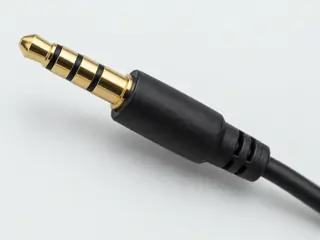
Four matching contacts can still be wired differently.
P021 / Audio / Connector form
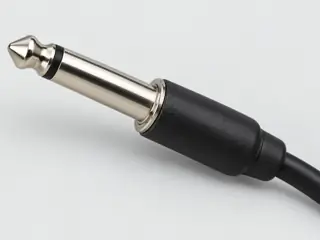
A quarter-inch plug is a size, not a complete audio specification.
P022 / Audio / Connector form
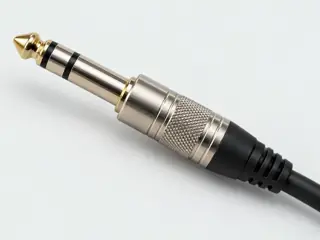
TRS is not a universal synonym for stereo.
P023 / Audio / Connector form
A matching RCA plug does not identify analog versus digital signaling.
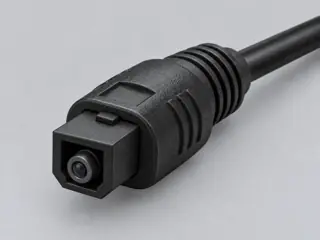
P024 / Audio / Connector form
Optical shape matching still does not establish an audio-format match.
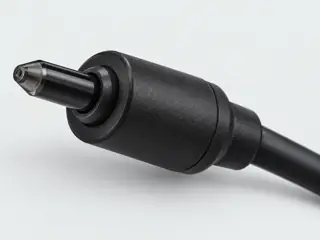
P025 / Audio / Connector form
Similar size does not mean the same signal.
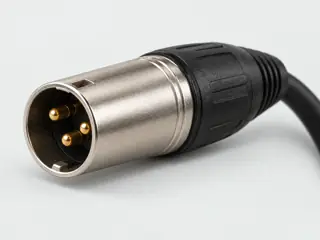
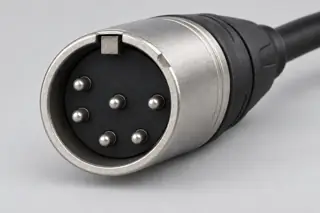
P026 / Audio / Connector form
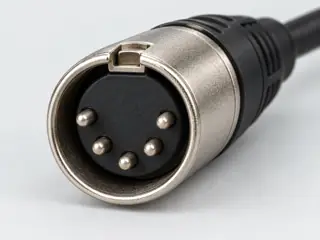
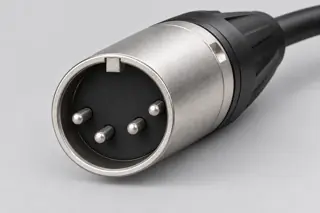
XLR shape alone does not establish the signal or power arrangement.
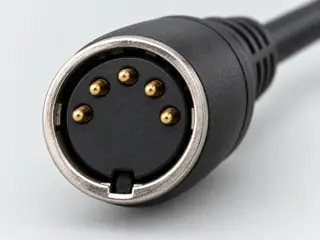
P110 / Audio / Connector form
MIDI is a transport context, not every DIN socket.
P126 / Audio / Connector form
XLR names a family, not one signal.
P127 / Audio / Connector form
Loudspeaker connection does not mean mains power.
P128 / Audio / Connector form
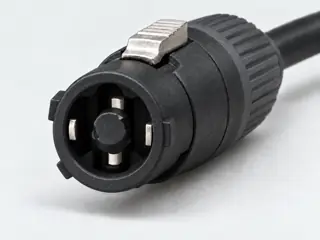
Four poles do not specify an amplifier wiring mode.
P206 / Audio / Connector form
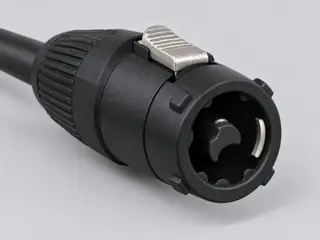
Pole count identifies the connector form, not the device signal, power scheme or pin assignment.
P207 / Audio / Connector form
Pole count alone does not identify the application or electrical assignment.
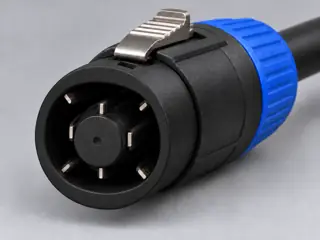
P208 / Audio / Connector form
Eight poles do not define channel allocation, bridge mode or amplifier wiring.
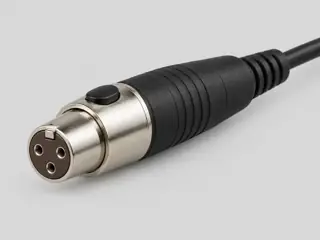
P309 / Audio / Connector form
Mini-XLR family name and conductor count identify a connector form; they do not establish the connected device signal, power scheme or contact assignment.
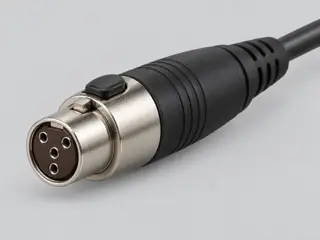
P310 / Audio / Connector form
Mini-XLR family name and conductor count identify a connector form; they do not establish the connected device signal, power scheme or contact assignment.
P311 / Audio / Connector form
Mini-XLR family name and conductor count identify a connector form; they do not establish the connected device signal, power scheme or contact assignment.
An alternate overview of the same facts shown in the cards. On narrow screens, scroll the table horizontally or read the cards above. Alias lists retain the existing first four entries; the full record has further detail. This is not a dimension, pinout or compatibility table.
Tell them apart
Related pages may include forms from another family. They explain distinctions, not permission to connect.
Similar at first glance
Before choosing a reference
Resolve abbreviations, informal names and legacy labels without treating an alias as an additional connector identity.
Open Audio terminology and aliases →Continue with the evidence
A family name is a starting point. Use the exact record and device documentation before choosing cables or planning a connection.