FIELD GUIDESource-led reference

P061 / Storage / Connector

Full-size SD card form

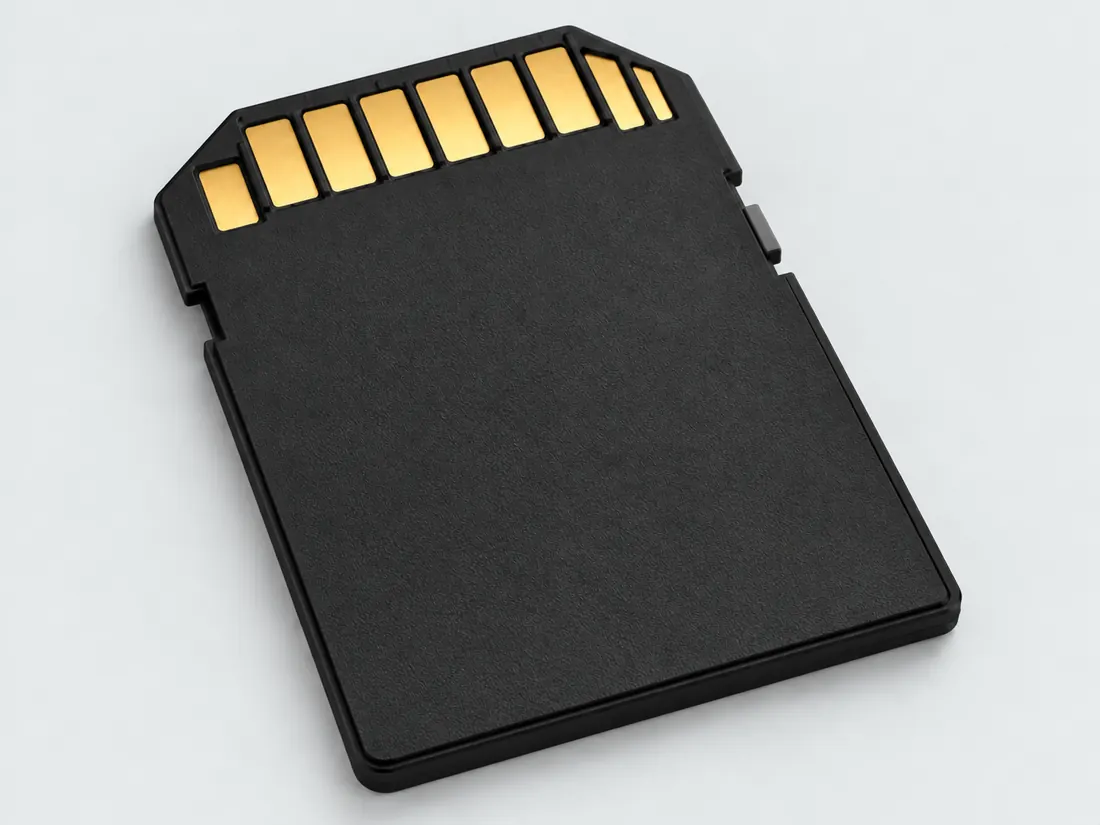
SD and microSD are distinct physical card forms. The form-factor label does not by itself establish capacity class, bus mode or recording performance.

Also called SD card SD slot full size SD

The card shape is one label; capacity and speed are separate labels.

Look for

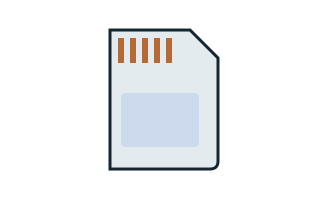
Compare the keyed card outline and the reader label. This unnumbered sketch represents a full-size card form, not a specific generation of contacts.

Claim inspection dates: 2026-10-01, 2026-10-07 · Independent review pending

Image inspection / P061

See the view. Check its scope.

1 registered view for this reference. Different part examples are not automatically mates; all remain not to scale and independently unapproved.

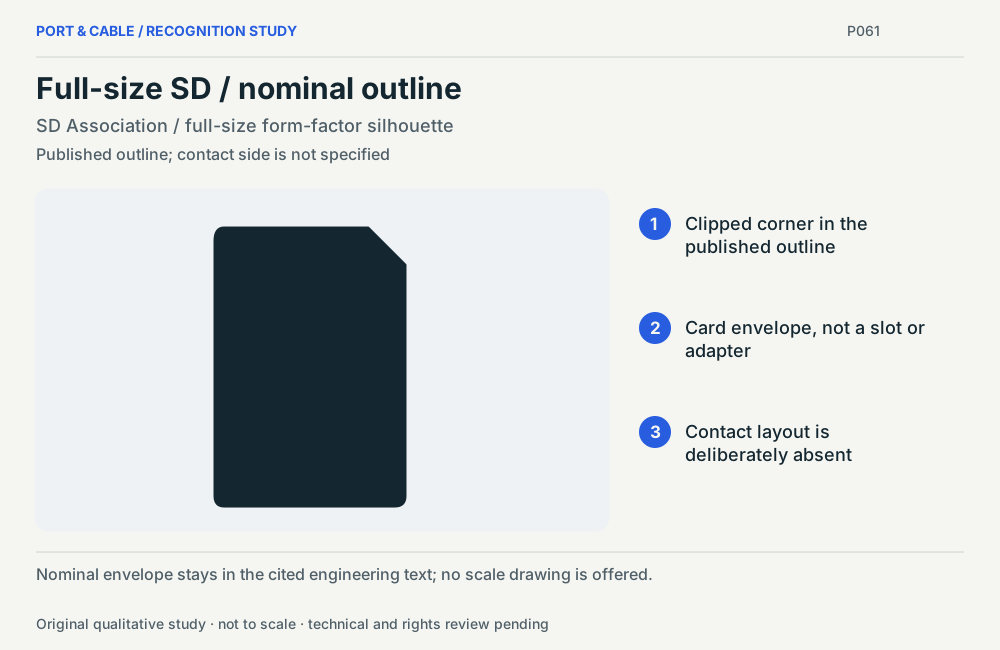
Full-size SD / nominal outline. Clipped corner in the published outline. Card envelope, not a slot or adapter. Contact layout is deliberately absent. Nominal envelope stays in the cited engineering text; no scale drawing is offered. Not to scale. (private workspace)

P061 / Source-observed physical study

Full-size SD / nominal outline

SD Association / full-size form-factor silhouette

Published outline; contact side is not specified · Other declared component

Not to scale. Technical and rights review pending.

Inspect view & provenance (private workspace)
Inspect the illustrationCard-outline schematic · larger view & look-alikes
Full-size SD card form — card-outline schematic; card illustration; original, not-to-scale identification schematic; drawing review pending
View Card-outline schematicDepiction Card illustrationNot to scale · independent drawing review pending

Read the view

Full-size card outline with a clipped upper-right corner

The card is drawn vertically. This is a recognition symbol, not a verified front/back pair or reader insertion view.

About the marks: Contact strokes are symbolic; do not count them as the card contacts.

What it cannot establish: The illustrated contact strokes do not identify a bus generation, speed class or actual contact population.

Enlargement changes display size only. It does not reveal measured geometry, a pin assignment or an approved mating combination.

Compare a likely look-alike

Read the underlying references: S041 · S042. Artwork interpretation remains review-pending.

How to read connector illustrations →

The useful distinction

Recognize it. Then verify it.

SD and microSD are distinct physical card forms. The form-factor label does not by itself establish capacity class, bus mode or recording performance. [C061A]

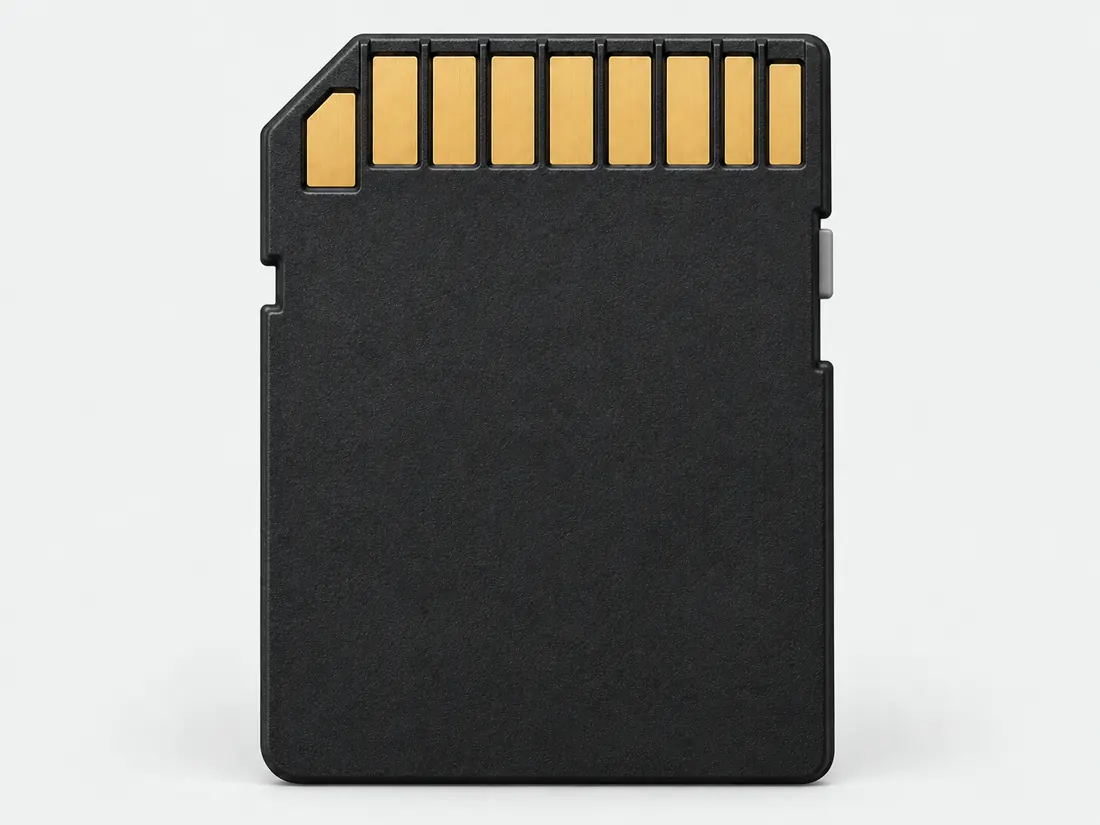
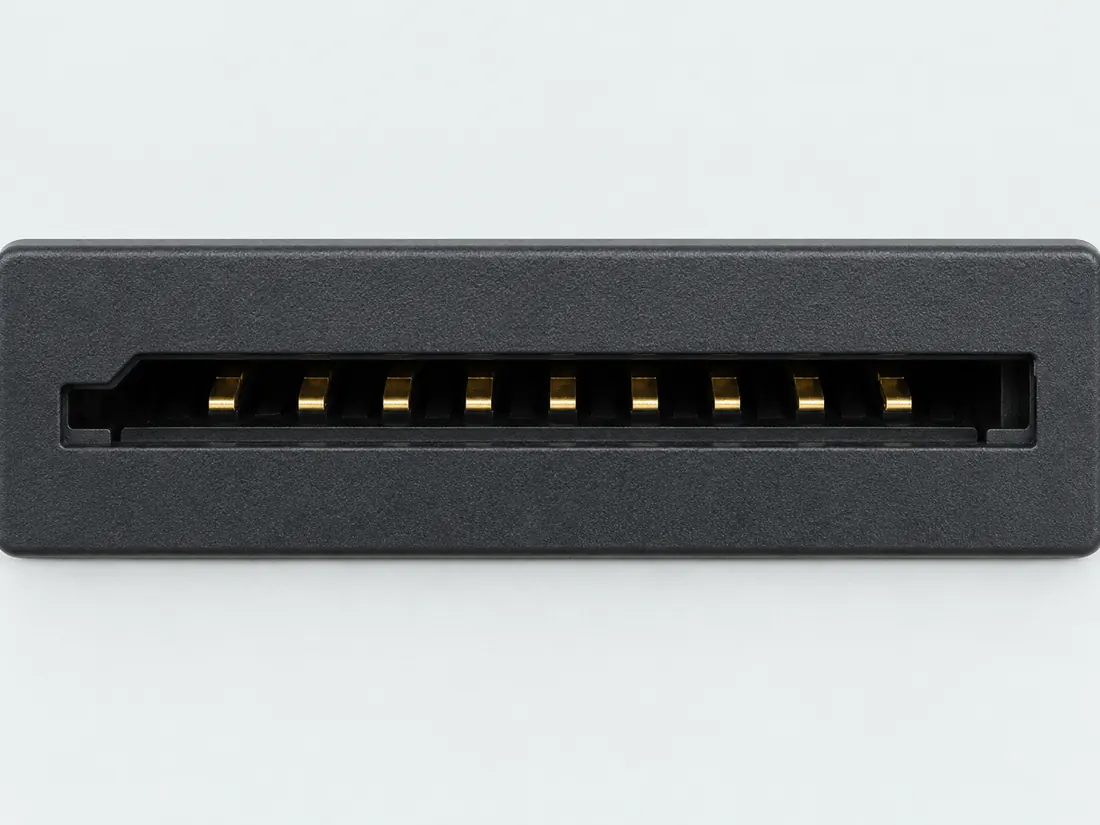
The SD Association lists a nominal full-size SD card envelope of 32 × 24 × 2.1 mm. Conventional single-row cards for Default Speed, High Speed and UHS-I use nine contacts. [C061B]

The SD Association overview distinguishes full-size SD contact counts by interface: High Speed/UHS-I nine, UHS-II seventeen, one-lane SD Express seventeen to nineteen, and two-lane SD Express twenty-five to twenty-seven. [C061C]

Source-scoped identification facts

Each value retains its exact example, role and measurement axis. Facts from different parts must not be combined into an invented component.

Documented examples; not a mating drawing or compatibility approval
Nominal contacts9S041 · S042 · S041Conventional card contact face, not a receptacle terminal or PCB footprint; nominal engineering count, not automatically positions, population or a device wiring map. Conventional card contact face, not a receptacle terminal or PCB footprint
Contact rows1 (Claim C061B)S041 · S042Recorded source-scoped values; named examples do not describe every family variant or establish compatibility. The SD Association lists a nominal full-size SD card envelope of 32 × 24 × 2.1 mm. Conventional single-row cards for Default Speed, High Speed and UHS-I use nine contacts. | Nominal card identification and conventional first-row contact count only; not a socket footprint, pad drawing, tolerance specification or all-generation pin count.
Dimensions / axis32 mm Nominal card length; 24 mm Nominal card width; 2.1 mm Nominal maximum envelope thicknessS041 · S042Recorded source-scoped values; named examples do not describe every family variant or establish compatibility. nominal_identifier; Conventional card contact face, not a receptacle terminal or PCB footprint
Connector rolesocketS041 · S042 · S041Recorded source-scoped values; named examples do not describe every family variant or establish compatibility. Conventional card contact face, not a receptacle terminal or PCB footprint
SeriesSDS919Named source examples retain separate role, part, view and axis limits; values are not a universal family specification. SD. Nominal dimensions reproduced in the published tuple order; no length/width names invented from unlabelled axes.; Capacity/speed logos are separate standards; no specimen logo, speed or compatibility inferred.

Not recorded: Positions / cavity span, Populated contacts, Contact pitch, Contact gender / arrangement, Mounting, Coupling / latch, Keying / polarization, Shell / form, Manufacturer, Exact part / implementation, Recorded markings, View convention. Unknown fields stay unknown; illustrations supply no measurements or pin assignments.

Recorded variant and source limits
  • Socket pad positions, terminal numbering, tolerances, keep-outs and insertion forces are not established.
  • Capacity-family support, enabled bus mode and speed class require exact card and host documentation.
  • Additional-row contacts are not represented by this conventional first-row contact count.
  • No electrical limits, initialization sequence, wiring procedure or fabrication approval are supplied.
  • Transcend SDHC10I/SDXC10I — sd-native: PDF p.1 Placement contact-side drawing and Pin Definition table. SD contact 9 is offset beside contact 1.
  • Transcend SDHC10I/SDXC10I — spi: PDF p.1 Placement contact-side drawing and Pin Definition table. SD contact 9 is offset beside contact 1.
  • Transcend SDHC10I/SDXC10I — Native SD mode: Card contact-side placement drawing on PDF p. 1, contact edge at top: main row 1-8 left to right; contact 9 is offset below-left of contact 1. Write-protect switch is shown on the right.
  • Transcend SDHC10I/SDXC10I — SPI mode: Card contact-side placement drawing on PDF p. 1, contact edge at top: main row 1-8 left to right; contact 9 is offset below-left of contact 1. Write-protect switch is shown on the right.
Report a correction to these facts →

Bounded facts, visible unknowns

Specifications and limits

Full-size SD card form facts and limitations
Record layerPhysical card form [C061A]
PerformanceNot established by physical size [C061A]
Nominal card envelope32 × 24 × 2.1 mm [C061B]
Conventional first-row contacts9; not a universal all-generation count [C061B]
Mechanical dimensionsNominal card envelope is source-checked in the engineering reference. Mechanical tolerances and a fabrication drawing remain unavailable.
Engineering pinoutSource-checked engineering profile available; independent review pending. Open engineering profile →
Verified device listNot included. Check exact device and accessory documentation.
A boundary, not an omission to guess around.

No card SKU, host compatibility list, manufacturing dimensions or data-recovery procedure is included.

Before you connect

What to check

  1. Read the host manual for the accepted card form and capacity class.
  2. Record the bus interface and the exact speed-class symbol required.
  3. Keep card and adapter details together; a shape adapter is not a new controller.
  4. Back up data before any device-specific formatting step.
Trace a supported connection class →

Pins & wiring

Pinout

Choose the exact wiring. Pin numbers follow its stated view; a schematic does not establish physical positions. Check your exact device before wiring.

What the status labels mean
Confirmed
Recorded research passes agree within this variant; this is not independent human review or hardware validation.
Single source
Only one underlying document, or one pass, supports this assignment.
Device-specific
Supported for the named equipment or wiring only. Check your device’s manual.
Unverified
Missing or conflicting evidence. Do not wire from this row.
Not connected
The source explicitly says NC, no contact or no pin for this wiring.
Wiring variant

Transcend SDHC10I/SDXC10I — sd-native

Device-specific wiring. Check your device’s manual before connecting or applying power.

View and evidence limits

PDF p.1 Placement contact-side drawing and Pin Definition table. SD contact 9 is offset beside contact 1.

  • P061 SD — **Agree** on all nine native/SPI positions, but **same source** — Both use Transcend SDHC10I/SDXC10I V1.0, 2015-02-26. The www/non-www URLs return the same SHA-256. Native DAT/CMD/CLK/supply/ground assignments and SPI CS/DI/DO/reserved assignments match. Independent transcription, not a second authority; additional contact systems are outside scope.
  • UHS-II, SD Express/microSD Express extra contacts and enhanced forms are outside these single-row tables. Reserved SPI contacts are not inferred disconnected.
Full-size SD — conventional single-row engineering referencePDF p.1 Placement contact-side drawing and Pin Definition table. SD contact 9 is offset beside contact 1.SCHEMATIC · physical positions unconfirmedNot to scale · check the named wiring and device manual1: CD/DAT3 (device_specific)12: CMD (device_specific)23: VSS1 (device_specific)34: VDD (device_specific)45: CLK (device_specific)56: VSS2 (device_specific)67: DAT0 (device_specific)78: DAT1 (device_specific)89: DAT2 (device_specific)9powergrounddataConfigshieldNCUnknown
Schematic only · physical contact positions unconfirmed. Original drawing · not to scale. Scroll sideways if needed.
Transcend SDHC10I/SDXC10I — sd-native — source-scoped contact map
PinSignalWhat it doesStatus
1CD/DAT3Control, detection or configuration connection; check the source and device.Device-specific
Sources
2CMDControl, detection or configuration connection; check the source and device.Device-specific
Sources
3VSS1Ground reference and return.Device-specific
Sources
4VDDPower connection (VDD). Check the specified supply.Device-specific
Sources
5CLKClock or clock-control connection, as named by this source.Device-specific
Sources
6VSS2Ground reference and return.Device-specific
Sources
7DAT0Control, detection or configuration connection; check the source and device.Device-specific
Sources
8DAT1Control, detection or configuration connection; check the source and device.Device-specific
Sources
9DAT2Control, detection or configuration connection; check the source and device.Device-specific
Sources
Sources (1)

Transcend SDHC10I/SDXC10I — spi

Device-specific wiring. Check your device’s manual before connecting or applying power.

View and evidence limits

PDF p.1 Placement contact-side drawing and Pin Definition table. SD contact 9 is offset beside contact 1.

  • P061 SD — **Agree** on all nine native/SPI positions, but **same source** — Both use Transcend SDHC10I/SDXC10I V1.0, 2015-02-26. The www/non-www URLs return the same SHA-256. Native DAT/CMD/CLK/supply/ground assignments and SPI CS/DI/DO/reserved assignments match. Independent transcription, not a second authority; additional contact systems are outside scope.
  • UHS-II, SD Express/microSD Express extra contacts and enhanced forms are outside these single-row tables. Reserved SPI contacts are not inferred disconnected.
Full-size SD — conventional single-row engineering referencePDF p.1 Placement contact-side drawing and Pin Definition table. SD contact 9 is offset beside contact 1.SCHEMATIC · physical positions unconfirmedNot to scale · check the named wiring and device manual1: CS (device_specific)12: DI (device_specific)23: VSS (device_specific)34: VDD (device_specific)45: SCLK (device_specific)56: VSS2 (device_specific)67: DO (device_specific)78: RSV (device_specific)89: RSV (device_specific)9powergrounddataConfigshieldNCUnknown
Schematic only · physical contact positions unconfirmed. Original drawing · not to scale. Scroll sideways if needed.
Transcend SDHC10I/SDXC10I — spi — source-scoped contact map
PinSignalWhat it doesStatus
1CSControl, detection or configuration connection; check the source and device.Device-specific
Sources
2DIControl, detection or configuration connection; check the source and device.Device-specific
Sources
3VSSGround reference and return.Device-specific
Sources
4VDDPower connection (VDD). Check the specified supply.Device-specific
Sources
5SCLKClock or clock-control connection, as named by this source.Device-specific
Sources
6VSS2Ground reference and return.Device-specific
Sources
7DOControl, detection or configuration connection; check the source and device.Device-specific
Sources
8RSVReserved; no general-purpose wiring is established.Device-specific
Sources
9RSVReserved; no general-purpose wiring is established.Device-specific
Sources
Sources (1)

Transcend SDHC10I/SDXC10I — Native SD mode

Device-specific wiring. Check your device’s manual before connecting or applying power.

View and evidence limits

Card contact-side placement drawing on PDF p. 1, contact edge at top: main row 1-8 left to right; contact 9 is offset below-left of contact 1. Write-protect switch is shown on the right.

  • P061 SD — **Agree** on all nine native/SPI positions, but **same source** — Both use Transcend SDHC10I/SDXC10I V1.0, 2015-02-26. The www/non-www URLs return the same SHA-256. Native DAT/CMD/CLK/supply/ground assignments and SPI CS/DI/DO/reserved assignments match. Independent transcription, not a second authority; additional contact systems are outside scope.
  • UHS-II, UHS-III, SD Express/microSD Express extra contacts, optional additional power contacts, reader card-detect switches and adapter internal wiring are not established by this one-row manufacturer datasheet. These counts are not all-generation counts.
Full-size SD — conventional single-row engineering referenceCard contact-side placement drawing on PDF p. 1, contact edge at top: main row 1-8 left to right; contact 9 is offset below-left of contact 1. Write-protect switch is shown on the right.SCHEMATIC · physical positions unconfirmedNot to scale · check the named wiring and device manual1: CD/DAT3 (device_specific)12: CMD (device_specific)23: VSS1 (device_specific)34: VDD (device_specific)45: CLK (device_specific)56: VSS2 (device_specific)67: DAT0 (device_specific)78: DAT1 (device_specific)89: DAT2 (device_specific)9powergrounddataConfigshieldNCUnknown
Schematic only · physical contact positions unconfirmed. Original drawing · not to scale. Scroll sideways if needed.
Transcend SDHC10I/SDXC10I — Native SD mode — source-scoped contact map
PinSignalWhat it doesStatus
1CD/DAT3Control, detection or configuration connection; check the source and device.Device-specific
Sources
2CMDControl, detection or configuration connection; check the source and device.Device-specific
Sources
3VSS1Ground reference and return.Device-specific
Sources
4VDDPower connection (VDD). Check the specified supply.Device-specific
Sources
5CLKClock or clock-control connection, as named by this source.Device-specific
Sources
6VSS2Ground reference and return.Device-specific
Sources
7DAT0Control, detection or configuration connection; check the source and device.Device-specific
Sources
8DAT1Control, detection or configuration connection; check the source and device.Device-specific
Sources
9DAT2Control, detection or configuration connection; check the source and device.Device-specific
Sources
Sources (1)

Transcend SDHC10I/SDXC10I — SPI mode

Device-specific wiring. Check your device’s manual before connecting or applying power.

View and evidence limits

Card contact-side placement drawing on PDF p. 1, contact edge at top: main row 1-8 left to right; contact 9 is offset below-left of contact 1. Write-protect switch is shown on the right.

  • P061 SD — **Agree** on all nine native/SPI positions, but **same source** — Both use Transcend SDHC10I/SDXC10I V1.0, 2015-02-26. The www/non-www URLs return the same SHA-256. Native DAT/CMD/CLK/supply/ground assignments and SPI CS/DI/DO/reserved assignments match. Independent transcription, not a second authority; additional contact systems are outside scope.
  • UHS-II, UHS-III, SD Express/microSD Express extra contacts, optional additional power contacts, reader card-detect switches and adapter internal wiring are not established by this one-row manufacturer datasheet. These counts are not all-generation counts.
Full-size SD — conventional single-row engineering referenceCard contact-side placement drawing on PDF p. 1, contact edge at top: main row 1-8 left to right; contact 9 is offset below-left of contact 1. Write-protect switch is shown on the right.SCHEMATIC · physical positions unconfirmedNot to scale · check the named wiring and device manual1: CS (device_specific)12: DI (device_specific)23: VSS (device_specific)34: VDD (device_specific)45: SCLK (device_specific)56: VSS2 (device_specific)67: DO (device_specific)78: RSV (device_specific)89: RSV (device_specific)9powergrounddataConfigshieldNCUnknown
Schematic only · physical contact positions unconfirmed. Original drawing · not to scale. Scroll sideways if needed.
Transcend SDHC10I/SDXC10I — SPI mode — source-scoped contact map
PinSignalWhat it doesStatus
1CSControl, detection or configuration connection; check the source and device.Device-specific
Sources
2DIControl, detection or configuration connection; check the source and device.Device-specific
Sources
3VSSGround reference and return.Device-specific
Sources
4VDDPower connection (VDD). Check the specified supply.Device-specific
Sources
5SCLKClock or clock-control connection, as named by this source.Device-specific
Sources
6VSS2Ground reference and return.Device-specific
Sources
7DOControl, detection or configuration connection; check the source and device.Device-specific
Sources
8RSVReserved; no general-purpose wiring is established.Device-specific
Sources
9RSVReserved; no general-purpose wiring is established.Device-specific
Sources
Sources (1)

Record the exact host

Write down the device model and supported card wording before buying or formatting anything. Use its documented storage requirements rather than the largest number on a package.

Conventional contacts are a scoped reference

The engineering page separates the 9-contact conventional first row from additional-row variants. Nominal size helps distinguish the card form but does not settle host support or provide a socket footprint.

Extra rows require their own evidence

Additional-row SD variants have different contact totals. A count-only conventional reference does not establish those assignments or identify the actual controller behind a slot.

Your next step

Move from the form to the requirement.

The source trail

Evidence for this page

AI-assisted inspection is not independent engineering review. Source scope and access limitations are disclosed below. Procedural checklists are editorial requirements, not hardware measurements.

Back to first citation ↑
C061ASource checked · pending review

SD and microSD are distinct physical card forms. The form-factor label does not by itself establish capacity class, bus mode or recording performance.

SD Association · SD Standard Overview ↗

Locator: Conventional-card paragraph and form-factor table: first-row counts and UHS-II / SD Express count ranges
Access: public page. Counts are scoped to named modes. The overview does not identify an exact card or host, and extra-row count does not establish implemented protocol.

S041: full source recordInspect review dependencies → (private workspace)

Claim scope: Named standard or manufacturer description only; procedural checks are editorial recommendations, not hardware tests.. Next review due 2026-12-30.

Back to first citation ↑
C061BSource checked · pending review

The SD Association lists a nominal full-size SD card envelope of 32 × 24 × 2.1 mm. Conventional single-row cards for Default Speed, High Speed and UHS-I use nine contacts.

SD Association · SD Standard Overview ↗

Locator: Conventional-card paragraph and form-factor table: first-row counts and UHS-II / SD Express count ranges
Access: public page. Counts are scoped to named modes. The overview does not identify an exact card or host, and extra-row count does not establish implemented protocol.

S041: full source recordSD Association · Capacity: SD, SDHC, SDXC and SDUC ↗

Locator: Capacity ranges, file-system table and Form Factor Size rows
Access: public page. Nominal card envelopes are identification aids, not mechanical tolerances, socket footprints, pad positions or formatting instructions.

S042: full source recordInspect review dependencies → (private workspace)

Claim scope: Nominal card identification and conventional first-row contact count only; not a socket footprint, pad drawing, tolerance specification or all-generation pin count.. Next review due 2027-01-05.

Back to first citation ↑
C061CSource checked · pending review

The SD Association overview distinguishes full-size SD contact counts by interface: High Speed/UHS-I nine, UHS-II seventeen, one-lane SD Express seventeen to nineteen, and two-lane SD Express twenty-five to twenty-seven.

SD Association · SD Standard Overview ↗

Locator: Conventional-card paragraph and form-factor table: first-row counts and UHS-II / SD Express count ranges
Access: public page. Counts are scoped to named modes. The overview does not identify an exact card or host, and extra-row count does not establish implemented protocol.

S041: full source recordInspect review dependencies → (private workspace)

Claim scope: Published overview categories inspected 2026-10-07; count ranges retain implementation variation and do not assign individual pins or identify a host controller.. Next review due 2027-01-05.

Suggest a correction to this field note →

Common questions

Questions this record can help resolve

Take this family into a reader workflow.

See documented support, explicit exclusions and remaining unknowns for exact readers.

Put this field note to work.

Add to discovery trayRecord an unsaved candidate (private workspace)

Compare look-alikes: SD versus microSD

Candidate selection does not confirm the identity or capabilities of your physical item.

Evidence behind this page

Scope first. Source second. Approval separate.

2 linked sources · 3 scoped claims · 0 sources with inspection/access flags.

Page scope: consumer_pilot

Assessment 2026-10-22 · earliest scheduled source review 2027-01-05. This is a recorded-date assessment, not a live source check. Page-level independent review is not established by this panel.

Inspect 2 source scopes, access limits and dates

S041 · SD Standard Overview

SD Association · Standards-organization domain · inspected 2026-10-07 · due 2027-01-05

Within inspection window

Scoped support: SD/microSD physical-form and generation-specific contact-count distinctions; no numbered assignments or fabrication drawing.

Not established / limitations: Counts are scoped to named modes. The overview does not identify an exact card or host, and extra-row count does not establish implemented protocol.

Locator: Conventional-card paragraph and form-factor table: first-row counts and UHS-II / SD Express count ranges

S042 · Capacity: SD, SDHC, SDXC and SDUC

SD Association · Standards-organization domain · inspected 2026-10-07 · due 2027-01-05

Within inspection window

Scoped support: SD capacity/file-system classes and nominal full-size SD and microSD envelopes; not host capacity approval.

Not established / limitations: Nominal card envelopes are identification aids, not mechanical tolerances, socket footprints, pad positions or formatting instructions.

Locator: Capacity ranges, file-system table and Form Factor Size rows

Trace 3 claims to their source records

C061A · P061

SD and microSD are distinct physical card forms. The form-factor label does not by itself establish capacity class, bus mode or recording performance.

Claim scope: Named standard or manufacturer description only; procedural checks are editorial recommendations, not hardware tests.

Source links: S041 · Evidence trail → (private workspace)

C061B · P061

The SD Association lists a nominal full-size SD card envelope of 32 × 24 × 2.1 mm. Conventional single-row cards for Default Speed, High Speed and UHS-I use nine contacts.

Claim scope: Nominal card identification and conventional first-row contact count only; not a socket footprint, pad drawing, tolerance specification or all-generation pin count.

Source links: S041 · S042 · Evidence trail → (private workspace)

C061C · P061

The SD Association overview distinguishes full-size SD contact counts by interface: High Speed/UHS-I nine, UHS-II seventeen, one-lane SD Express seventeen to nineteen, and two-lane SD Express twenty-five to twenty-seven.

Claim scope: Published overview categories inspected 2026-10-07; count ranges retain implementation variation and do not assign individual pins or identify a host controller.

Source links: S041 · Evidence trail → (private workspace)

Prepare this page for review → (private workspace)Read the evidence method →

Recorded evidence only. An inspection date, publisher label, source link or generated packet is not independent technical review, hardware testing, fabrication approval or a compatibility verdict.