7 linked sources · 11 scoped claims · 0 sources with inspection/access flags.
Assessment 2026-10-22 · earliest scheduled source review 2026-12-30. This is a recorded-date assessment, not a live source check. Page-level independent review is not established by this panel.
Inspect 7 source scopes, access limits and dates
SD Association · Standards-organization domain · inspected 2026-10-07 · due 2027-01-05
Within inspection window
Scoped support: SD/microSD physical-form and generation-specific contact-count distinctions; no numbered assignments or fabrication drawing.
Not established / limitations: Counts are scoped to named modes. The overview does not identify an exact card or host, and extra-row count does not establish implemented protocol.
Locator: Conventional-card paragraph and form-factor table: first-row counts and UHS-II / SD Express count ranges
SD Association · Standards-organization domain · inspected 2026-10-07 · due 2027-01-05
Within inspection window
Scoped support: SD capacity/file-system classes and nominal full-size SD and microSD envelopes; not host capacity approval.
Not established / limitations: Nominal card envelopes are identification aids, not mechanical tolerances, socket footprints, pad positions or formatting instructions.
Locator: Capacity ranges, file-system table and Form Factor Size rows
SD Association · Standards-organization domain · inspected 2026-10-01 · due 2026-12-30
Within inspection window
Scoped support: Specified bus modes and distinction from measured card performance.
Not established / limitations: Specified bus modes and distinction from measured card performance.
Locator: Bus interface table; duplex explanation; final speed caveat
SD Association · Standards-organization domain · inspected 2026-10-07 · due 2027-01-05
Within inspection window
Scoped support: Minimum sequential-performance class symbols and same-family host/card matching under defined conditions.
Not established / limitations: Bus modes and performance classes are distinct. Shared numeric minima across different class symbols do not guarantee the requested host class; no particular video mode is approved.
Locator: Speed-class families and Best Combination between Speed Class Host and Card
SD Association · Standards-organization domain · inspected 2026-10-01 · due 2026-12-30
Within inspection window
Scoped support: PCIe/NVMe transport and explicit host capability verification.
Not established / limitations: PCIe/NVMe transport and explicit host capability verification.
Locator: Host implementation overview and PCIe-only host distinction
Swissbit AG (manufacturer document hosted by Farnell) · Unclassified publisher domain · inspected 2026-10-07 · due 2027-01-05
Within inspection window
Scoped support: Exact Swissbit S-46u conventional microSD pin-label example; native SD-mode assignment and orientation.
Not established / limitations: Distributor-hosted manufacturer PDF, not an independently authenticated original. No universal SPI, SD Express or UHS-II pinout; original 19-page document is linked, not redistributed.
Locator: Page 8, Figure 2 bottom view and Table 11 native SD / SPI pad assignments
SD Association · Standards-organization domain · inspected 2026-10-07 · due 2027-01-05
Within inspection window
Scoped support: Named-version SD Express connector/host context, particularly the different microSD Express and microSD UHS-II second-row geometry.
Not established / limitations: Targeted sections only, not a full licensed specification review. No claim that every legacy, Express or multi-mode host supports another card; no fabrication approval.
Locator: Page 13, sections 4.10.1 and 4.10.2; context in pages 7–8
Trace 11 claims to their source records
C061A · P061
SD and microSD are distinct physical card forms. The form-factor label does not by itself establish capacity class, bus mode or recording performance.
Claim scope: Named standard or manufacturer description only; procedural checks are editorial recommendations, not hardware tests.
Source links: S041 · Evidence trail → (private workspace)
C061B · P061
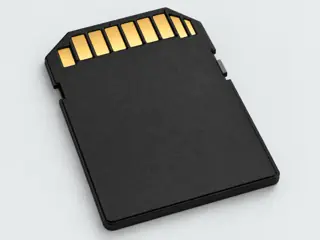
The SD Association lists a nominal full-size SD card envelope of 32 × 24 × 2.1 mm. Conventional single-row cards for Default Speed, High Speed and UHS-I use nine contacts.
Claim scope: Nominal card identification and conventional first-row contact count only; not a socket footprint, pad drawing, tolerance specification or all-generation pin count.
Source links: S041 · S042 · Evidence trail → (private workspace)
C061C · P061
The SD Association overview distinguishes full-size SD contact counts by interface: High Speed/UHS-I nine, UHS-II seventeen, one-lane SD Express seventeen to nineteen, and two-lane SD Express twenty-five to twenty-seven.
Claim scope: Published overview categories inspected 2026-10-07; count ranges retain implementation variation and do not assign individual pins or identify a host controller.
Source links: S041 · Evidence trail → (private workspace)
C062A · P062
The SD Association treats microSD as a separate, smaller form factor from full-size SD. Capacity, bus interface and speed-class support remain additional distinctions.
Claim scope: Named standard or manufacturer description only; procedural checks are editorial recommendations, not hardware tests.
Source links: S041 · S045 · Evidence trail → (private workspace)
C062B · P062
The SD Association lists a nominal microSD envelope of 15 × 11 × 1.0 mm (length × width × thickness). Conventional single-row cards for Default Speed, High Speed and UHS-I use eight contacts.
Claim scope: Nominal microSD card identification and conventional first-row count; no inference about extra contacts, exact host support or fabrication dimensions.
Source links: S041 · S042 · Evidence trail → (private workspace)
C062C · P062
The SD Association overview distinguishes microSD contact counts by interface: High Speed/UHS-I eight, UHS-II sixteen, and one-lane microSD Express sixteen to seventeen.
Claim scope: Published overview categories inspected 2026-10-07, not an exhaustive identification method; physical contacts do not establish active bus support.
Source links: S041 · Evidence trail → (private workspace)
C062D · P062
Swissbit S-46u Revision 1.00, page 8, gives this native SD-mode assignment in Figure 2 bottom-view numbering: 1 DAT2, 2 CD/DAT3, 3 CMD, 4 VDD, 5 CLK, 6 VSS, 7 DAT0, 8 DAT1. The same table gives different SPI-mode functions on several pads.
Claim scope: Exact manufacturer-documented conventional microSD example; native SD-mode column only. Not a UHS-II/Express extra-row pinout, socket-terminal map, startup sequence or universal SPI wiring guide.
Source links: S391 · Evidence trail → (private workspace)
C062E · P062
The SD Association SD Express Host Implementation Guideline Version 2 (May 2025), section 4.10.2, states that microSD Express needs different connectors because the second-row pad location and size differ from microSD UHS-II.
Claim scope: microSD second-row mechanical distinction in the named guideline; not proof of compatibility or incompatibility of any complete multi-mode host product.
Source links: S392 · Evidence trail → (private workspace)
C069A · P069
The SD Association lists UHS-I SDR104 at 104 MB/s and UHS-II at 156 MB/s full duplex or 312 MB/s half duplex. These bus figures are not guaranteed sustained card-write rates.
Claim scope: Named standard or manufacturer description only; procedural checks are editorial recommendations, not hardware tests.
Source links: S043 · Evidence trail → (private workspace)
C069B · P069
UHS-I and UHS-II name bus interfaces; U1/U3 and V6/V10/V30/V60/V90 belong to speed-class symbol families. The SDA warns that matching numerical write-speed minima across different symbol families does not establish the host/card class match.
Claim scope: Label interpretation and defined minimum sequential-performance conditions only; not a measured transfer rate, blanket recording-mode recommendation or certification of an individual card.
Source links: S043 · S044 · Evidence trail → (private workspace)
C070A · P070
SD Express introduces PCIe and NVMe operation in the SD ecosystem. The SD Association distinguishes host implementations; a PCIe-only implementation must not be assumed to accept ordinary SD-mode cards.
Claim scope: Named standard or manufacturer description only; procedural checks are editorial recommendations, not hardware tests.
Source links: S045 · S043 · Evidence trail → (private workspace)
Recorded evidence only. An inspection date, publisher label, source link or generated packet is not independent technical review, hardware testing, fabrication approval or a compatibility verdict.