
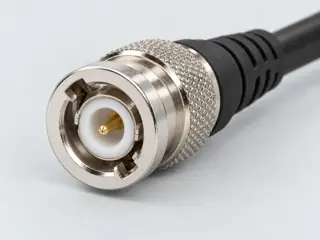
 Computer-generated illustration
P027 / Coax / Connector form
BNC connector
A locking fit is not an impedance match.
- Shape label
- round
- Common aliases
- BNC coax, bayonet coax
- Reference depth
- Engineering profile →
Family reference
Use shell, coupling and center-contact details to distinguish coaxial families. Connector identification alone does not establish frequency, impedance or application.
17 forms 17 engineering profiles 7 related comparisons
Recognition & reference
Recognition illustrations are not to scale or fabrication drawings. The label-led symbols below, where present, are not interface geometry. Read the illustration limits in each exact reference; equal image boxes do not establish equal physical sizes.
Computer-generated illustrationP027 / Coax / Connector form
A locking fit is not an impedance match.
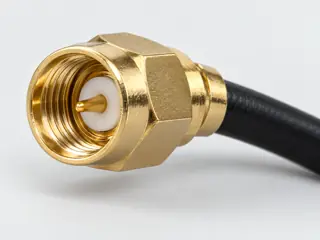 Computer-generated illustration
P063 / Coax / Connector form
Inspect the center contact as well as the outer shell.
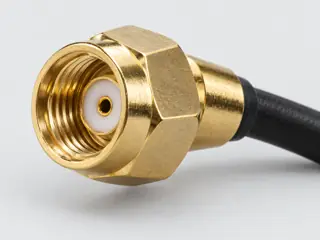 Computer-generated illustration
P064 / Coax / Connector form
The outer thread alone cannot settle SMA versus RP-SMA.
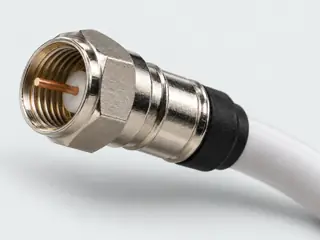 Computer-generated illustration
P065 / Coax / Connector form
A television-style coax connector is not the same family as SMA.
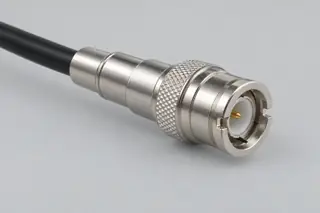 Computer-generated illustration
P205 / Coax / Connector form
A miniature bayonet coax outline does not establish 50-ohm versus 75-ohm system compatibility or signal format.
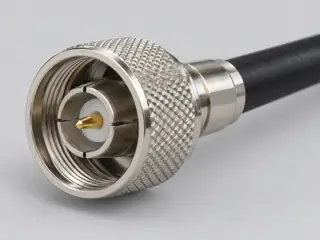 Computer-generated illustration
P224 / Coax / Connector form
Threaded RF connectors with similar proportions can still be different interfaces; identify the family before mating.
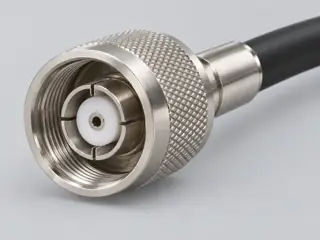 Computer-generated illustration
P225 / Coax / Connector form
Reverse polarity changes the interface contact arrangement; do not assume standard N-Type mating.
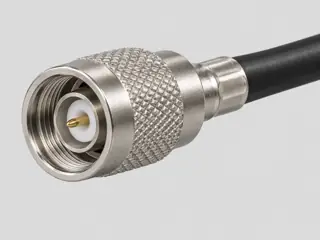 Computer-generated illustration
P226 / Coax / Connector form
Coupling style is a useful identifier, but it does not establish impedance or system performance.
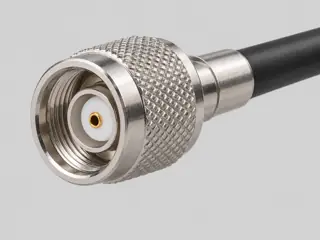 Computer-generated illustration
P227 / Coax / Connector form
Standard TNC and RP-TNC should be distinguished before mating or specifying adapters.
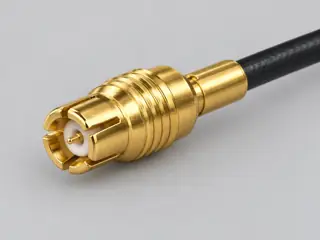 Computer-generated illustration
P228 / Coax / Connector form
MCX and MMCX are distinct miniature interfaces despite similar naming and snap-on behavior.
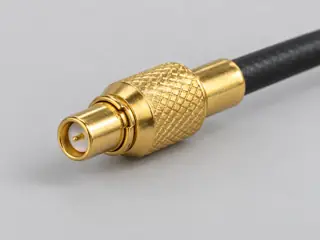 Computer-generated illustration
P229 / Coax / Connector form
A smaller snap-on RF connector is not automatically MMCX; verify the exact family and mating geometry.
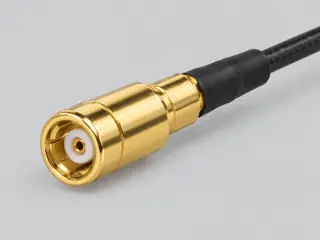 Computer-generated illustration
P230 / Coax / Connector form
SMB identity is not evidence for impedance, frequency or cable suitability.
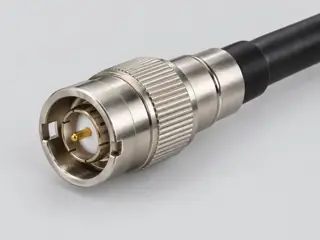 Computer-generated illustration
P231 / Coax / Connector form
Mini-BNC, BNC and HD-BNC are separate interfaces despite related broadcast use and naming.
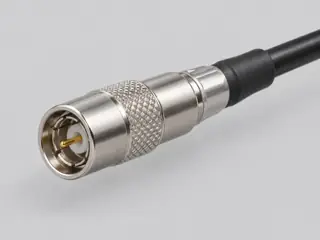 Computer-generated illustration
P232 / Coax / Connector form
The compact 1.0/2.3 interface must be identified separately from BNC, HD-BNC and other dense coax families.
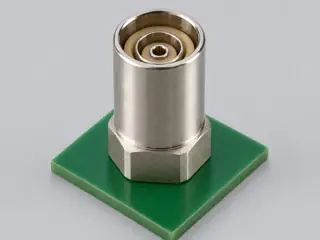 Computer-generated illustration
P314 / Coax / Connector form
Triax family and impedance identify the interface class, not the camera/system standard, cable assembly, mating counterpart or complete electrical compatibility.
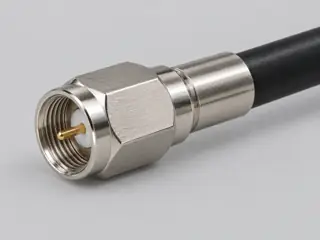 Computer-generated illustration
P365 / Coax / Connector form
A threaded shell identifies a candidate family, not an approved antenna path.
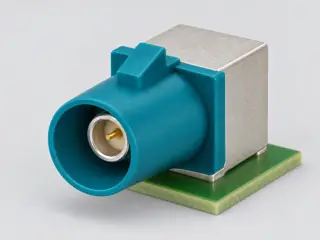 Computer-generated illustration
P366 / Coax / Connector form
Read component role, complete ordering code and mechanical coding before equipment function.
An alternate overview of the same facts shown in the cards. On narrow screens, scroll the table horizontally or read the cards above. Alias lists retain the existing first four entries; the full record has further detail. This is not a dimension, pinout or compatibility table.
Tell them apart
Related pages may include forms from another family. They explain distinctions, not permission to connect.
Similar at first glance
Before choosing a reference
Resolve abbreviations, informal names and legacy labels without treating an alias as an additional connector identity.
Open Coax terminology and aliases →Continue with the evidence
A family name is a starting point. Use the exact record and device documentation before choosing cables or planning a connection.