The useful distinction
Recognize it. Then verify it.
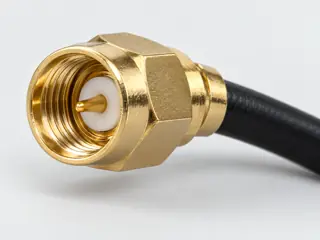
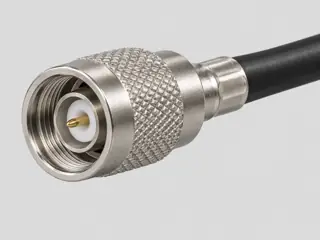
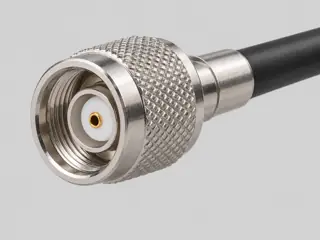
FME is a threaded miniature coaxial family; exact parts and cable configurations still require identification. [C365A]
Amphenol RF describes FME connections to UHF, Mini-UHF, TNC, BNC and N-Type through between-series adapters. [C365B]
The FME overview and table give DC–200 MHz while the technical-details section also mentions some variants up to 2.4 GHz. [C365C]
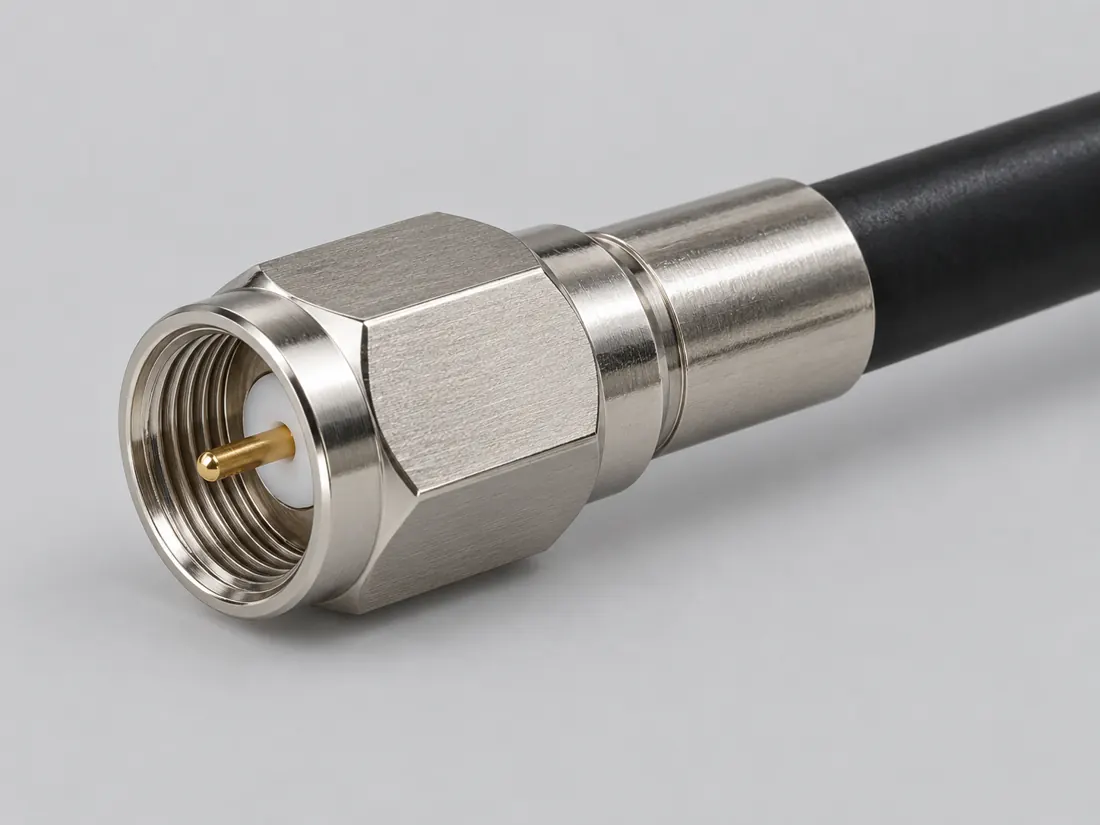
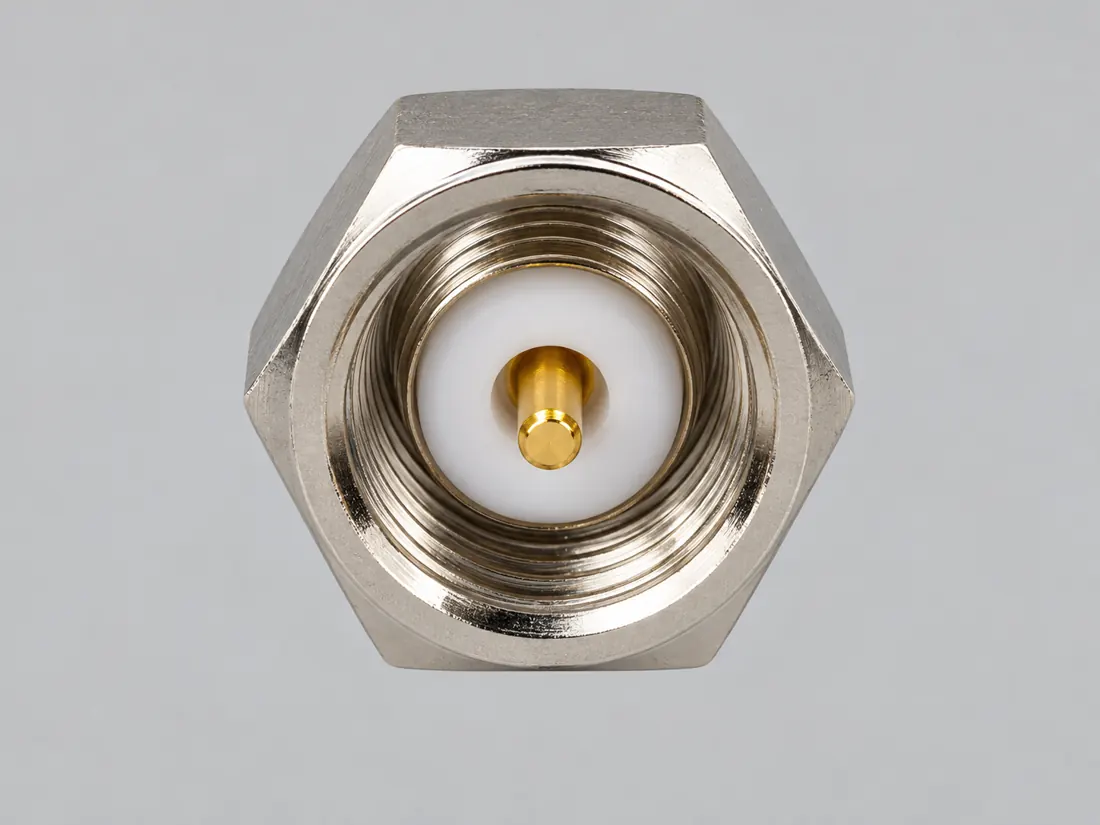
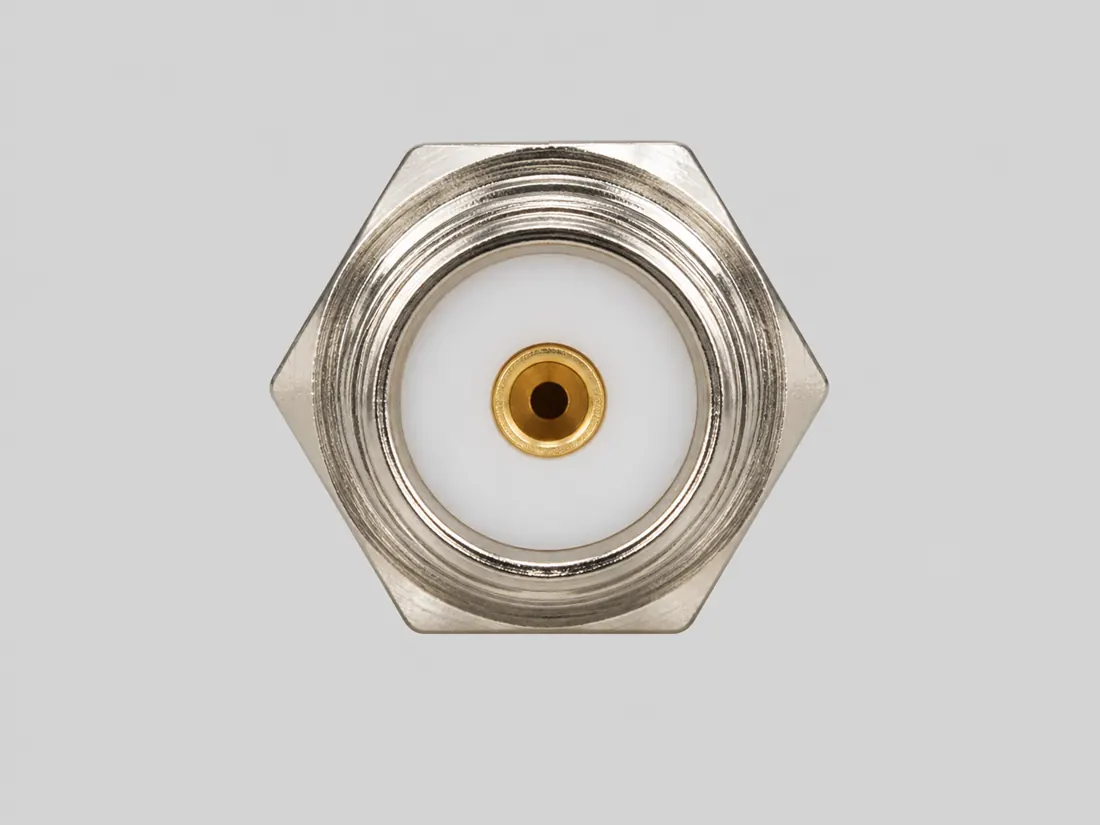
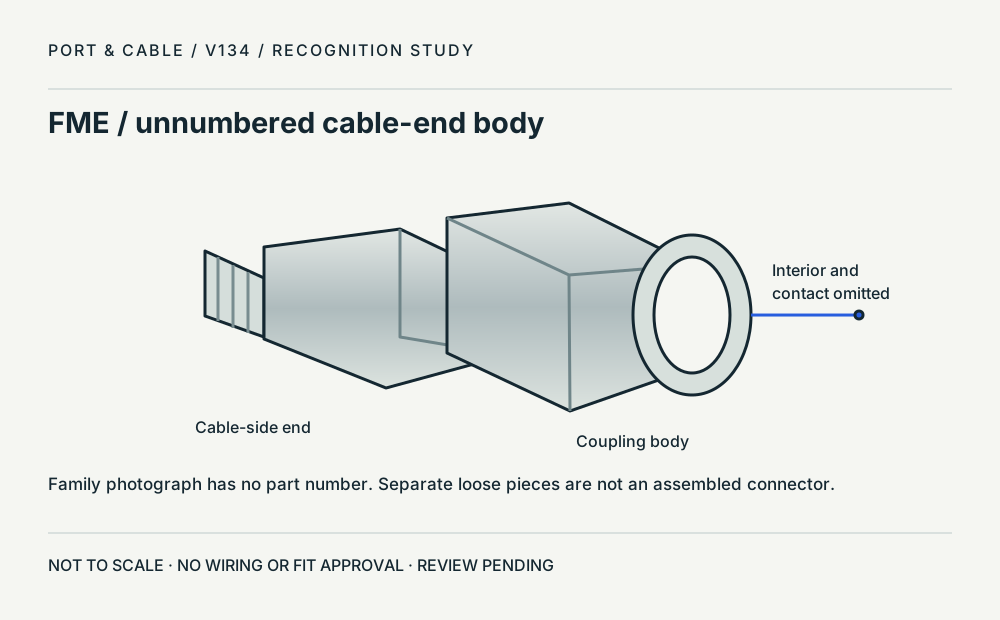
The FME overview photograph shows an unnumbered connector body with a separate center contact and a separate ferrule. [C365D]
Amphenol RF 192104 BNC-to-FME adapter: orientation: Straight between-series BNC plug to FME plug adapter; body: Brass body with nickel finish; contact finish: Brass contacts with gold finish; impedance: 50 ohms, complete named adapter specification. Only Amphenol RF 192104 BNC-to-FME adapter; no family-wide generalization. [C365E]
Source-scoped identification facts
Each value retains its exact example, role and measurement axis. Facts from different parts must not be combined into an invented component.
Not recorded: Nominal contacts, Positions / cavity span, Populated contacts, Contact rows, Contact pitch, Dimensions / axis, Contact gender / arrangement, Mounting, Keying / polarization, Recorded markings, View convention. Unknown fields stay unknown; illustrations supply no measurements or pin assignments.
Report a correction to these facts →Bounded facts, visible unknowns
Specifications and limits
A boundary, not an omission to guess around.Between-series adapters change the interface path. Their existence does not establish direct mating or the performance of the whole assembly.
Keep the frequency scope open
The family overview/table and the variant note use different frequency scopes. This page deliberately selects no universal operating limit.
The source trail
Evidence for this page
AI-assisted inspection is not independent engineering review. Source scope and access limitations are disclosed below. Procedural checklists are editorial requirements, not hardware measurements.
Back to first citation ↑C365ASource checked · pending review
Amphenol RF identifies FME as a miniature threaded coaxial connector family for mobile and antenna systems.
Amphenol RF · Amphenol RF FME family — threaded identity and variant limits ↗Locator: Overview, Features and Benefits, Key Technical Details, Specifications and typical-characteristics warning.
Access: public page. Source-bounded recognition only; no exact equipment compatibility, wiring, fabrication or universal performance approval.
S546: full source recordInspect review dependencies → (private workspace)Claim scope: Manufacturer family identity; not a mating or equipment approval.. Next review due 2027-01-10.
Back to first citation ↑C365BSource checked · pending review
Amphenol RF describes FME connections to UHF, Mini-UHF, TNC, BNC and N-Type through between-series adapters.
Amphenol RF · Amphenol RF FME family — threaded identity and variant limits ↗Locator: Overview, Features and Benefits, Key Technical Details, Specifications and typical-characteristics warning.
Access: public page. Source-bounded recognition only; no exact equipment compatibility, wiring, fabrication or universal performance approval.
S546: full source recordInspect review dependencies → (private workspace)Claim scope: Adapter-based transition is not direct intermateability or a system-performance guarantee.. Next review due 2027-01-10.
Back to first citation ↑C365CSource checked · pending review
The FME overview and table give DC–200 MHz while the technical-details section also mentions some variants up to 2.4 GHz.
Amphenol RF · Amphenol RF FME family — threaded identity and variant limits ↗Locator: Overview, Features and Benefits, Key Technical Details, Specifications and typical-characteristics warning.
Access: public page. Source-bounded recognition only; no exact equipment compatibility, wiring, fabrication or universal performance approval.
S546: full source recordInspect review dependencies → (private workspace)Claim scope: These are different scopes. Select no universal limit without an exact component and configuration.. Next review due 2027-01-10.
Back to first citation ↑C365DSource checked · pending review
The FME overview photograph shows an unnumbered connector body with a separate center contact and a separate ferrule.
Amphenol RF · Amphenol RF FME overview image — unnumbered body and loose parts ↗Locator: Linked overview photograph: one metallic connector body, a separate center contact and a separate ferrule.
Access: public page. Source-bounded recognition only; no exact equipment compatibility, wiring, fabrication or universal performance approval.
S547: full source recordInspect review dependencies → (private workspace)Claim scope: Visual observation only; no exact part or completed assembly established.. Next review due 2027-01-10.
Back to first citation ↑C365ESource checked · pending review
Amphenol RF 192104 BNC-to-FME adapter: orientation: Straight between-series BNC plug to FME plug adapter; body: Brass body with nickel finish; contact finish: Brass contacts with gold finish; impedance: 50 ohms, complete named adapter specification. Only Amphenol RF 192104 BNC-to-FME adapter; no family-wide generalization.
Amphenol RF · Amphenol RF 192104 BNC-plug to FME-plug adapter ↗Locator: Product Specifications: adapter configuration/type, body/contact materials and finish, straight orientation, impedance; current customer-drawing link dated 7 May 2026
Access: public page. Accessed through official-source web retrieval; underlying crawl age is separate from access date. No claim of live manufacturer response or complete latest-revision equivalence.
S856: full source recordInspect review dependencies → (private workspace)Claim scope: Only Amphenol RF 192104 BNC-to-FME adapter; no family-wide generalization.. Next review due 2027-01-20.
Suggest a correction to this field note →
 (private workspace)