The useful distinction
Recognize it. Then verify it.
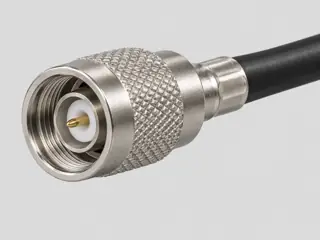
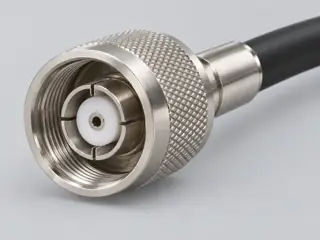
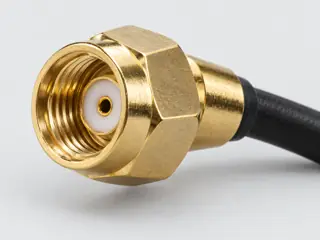
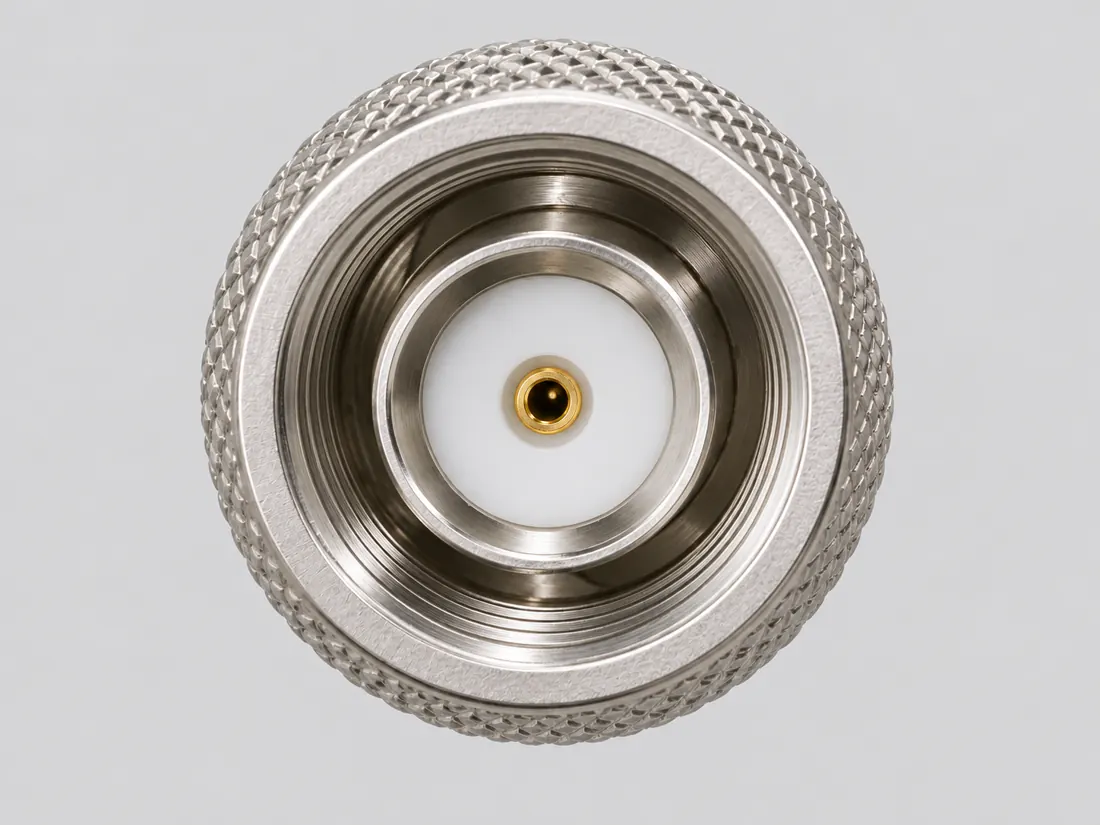
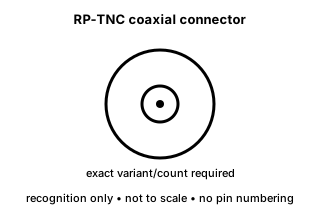
RP-TNC is the reverse-polarity TNC interface with the same threaded coupling family but reversed center-contact convention. [C227A]
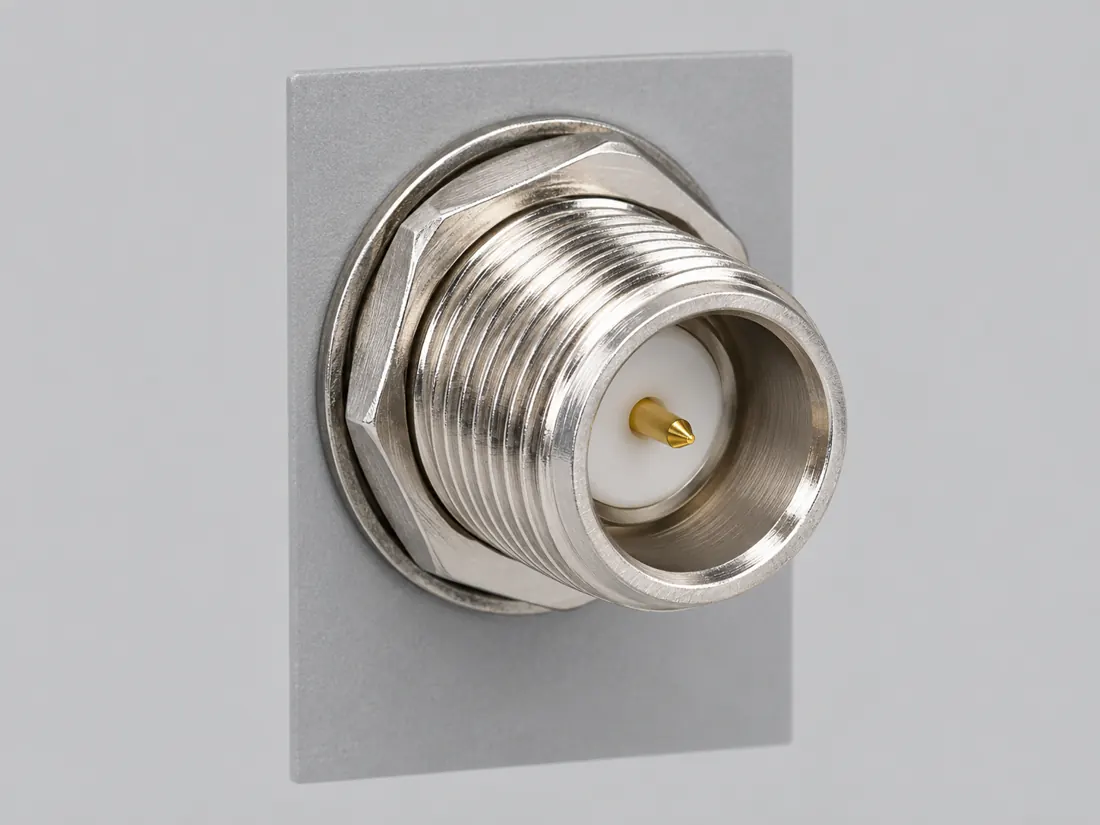
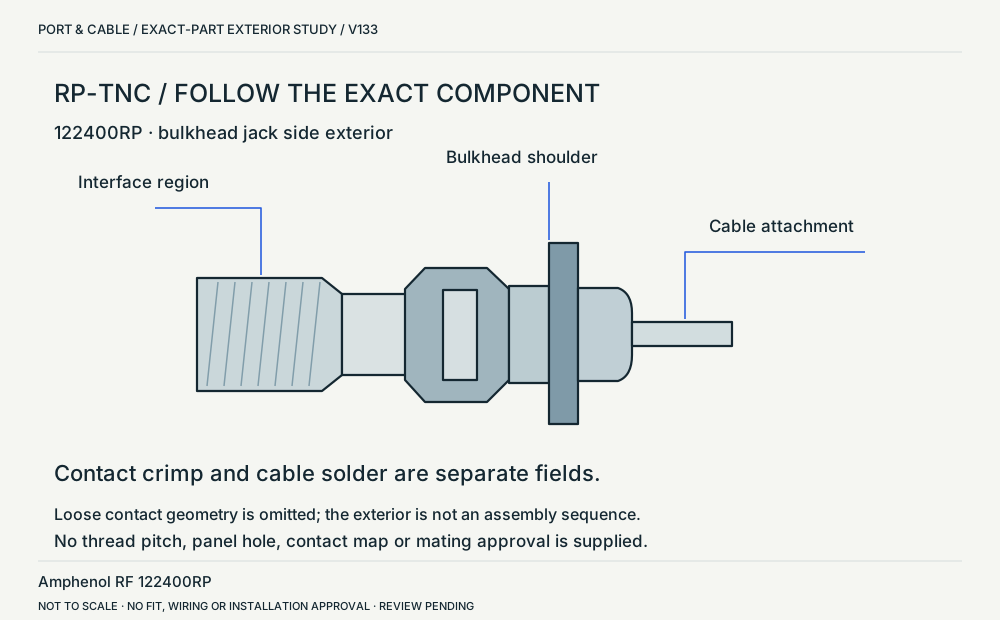
Amphenol RF identifies 122400RP as a straight 50-ohm RP-TNC jack with threaded coupling and rear bulkhead mounting. [C227D]
For 122400RP, the product page separately lists crimp contact termination and cable-solder termination style. [C227E]
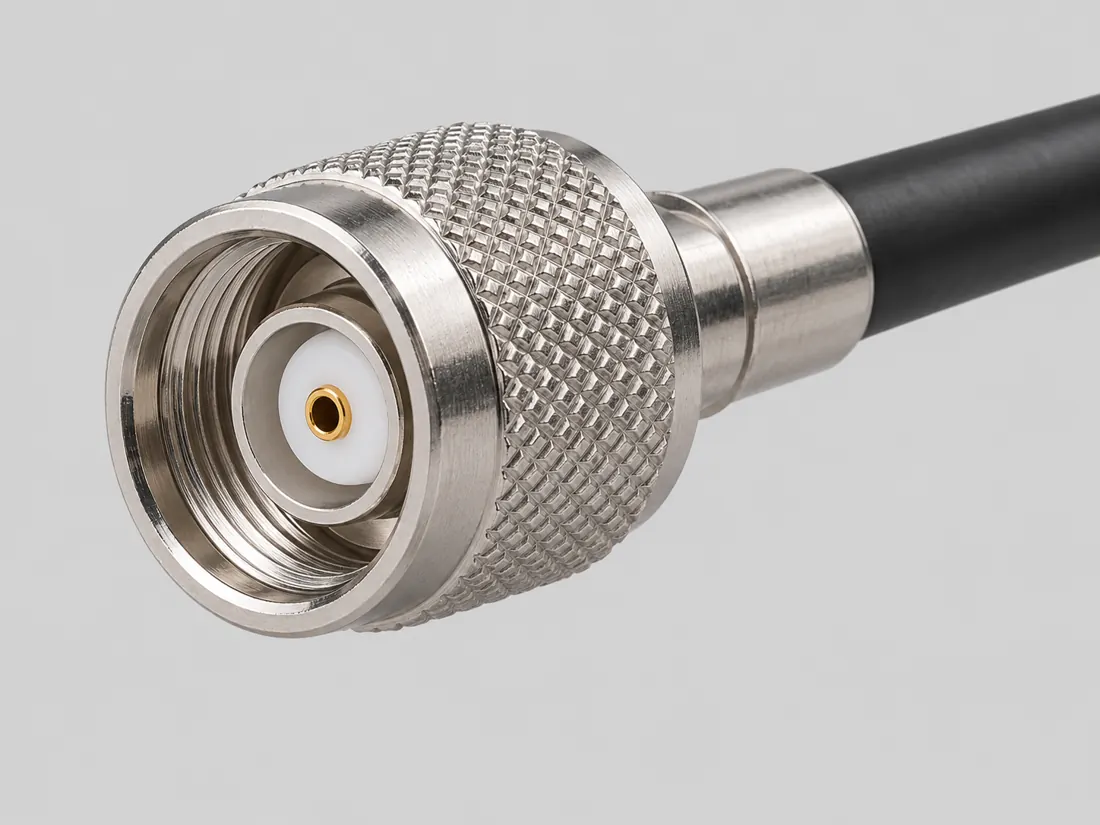
Amphenol RF 122108RP is a straight RP-TNC plug. Its table reports brass body; nickel finish, phosphor-bronze contact; gold finish, cable-crimp construction; crimp contact termination, threaded coupling, 50-ohm impedance, a 11-GHz frequency ceiling and 500 minimum mating cycles. It identifies a PTFE insulator. These are exact-part manufacturer specifications, not family-wide ratings or independent test results. [C227X]
Source-scoped identification facts
Each value retains its exact example, role and measurement axis. Facts from different parts must not be combined into an invented component.
Not recorded: Nominal contacts, Positions / cavity span, Populated contacts, Contact rows, Contact pitch, Dimensions / axis, Connector role, Contact gender / arrangement, Mounting, Keying / polarization, Shell / form, Exact part / implementation, Recorded markings, View convention. Unknown fields stay unknown; illustrations supply no measurements or pin assignments.
Recorded variant and source limits
- Coupling style or polarity identity does not establish cable type, impedance, frequency range or system compatibility for a specific assembly.
- No fabrication dimensions or mating-face contact locator is published.
Bounded facts, visible unknowns
Specifications and limits
A boundary, not an omission to guess around.Use the source-backed form or position count only for identification. Resolve ratings, protocol, direction, wiring, cable construction and exact device support from the relevant equipment and component documentation.
What is not established
This field note does not approve a connection, adapter, cable assembly, rewiring scheme or fabricated part. It intentionally omits unsupported pin assignments and mechanical tolerances.
The source trail
Evidence for this page
AI-assisted inspection is not independent engineering review. Source scope and access limitations are disclosed below. Procedural checklists are editorial requirements, not hardware measurements.
Back to first citation ↑C227ASource checked · pending review
Amphenol RF identifies RP-TNC as the reverse-polarity TNC interface with threaded coupling.
Amphenol RF · RP-TNC connectors ↗Locator: RP-TNC overview
Access: public page. Identification/reference scope only. V39 does not convert this source into a universal pinout, fabrication drawing, electrical approval, protocol guarantee or end-to-end compatibility verdict.
S231: full source recordInspect review dependencies → (private workspace)Claim scope: V39 catalogue-expansion identification fact only; not independent technical approval, fabrication data, wiring instruction, protocol guarantee or end-to-end compatibility proof.. Next review due 2027-01-03.
Back to first citation ↑C227DSource checked · pending review
Amphenol RF identifies 122400RP as a straight 50-ohm RP-TNC jack with threaded coupling and rear bulkhead mounting.
Amphenol RF · Amphenol RF 122400RP — RP-TNC bulkhead jack roles ↗Locator: Heading; Gender, Impedance, Coupling, Panel Mounting Feature, Contact Termination and Termination Style. Linked 122400RP revision A drawing inspected separately.
Access: public page. Contact Termination is Crimp; Termination Style is Cable - Solder. These describe separate operations, not a justified reason to relabel the whole part. No assembly procedure or mating-contact reconstruction provided.
S545: full source recordInspect review dependencies → (private workspace)Claim scope: Exact 122400RP; no inferred thread direction or universal reverse-polarity fit.. Next review due 2027-01-10.
Back to first citation ↑C227ESource checked · pending review
For 122400RP, the product page separately lists crimp contact termination and cable-solder termination style.
Amphenol RF · Amphenol RF 122400RP — RP-TNC bulkhead jack roles ↗Locator: Heading; Gender, Impedance, Coupling, Panel Mounting Feature, Contact Termination and Termination Style. Linked 122400RP revision A drawing inspected separately.
Access: public page. Contact Termination is Crimp; Termination Style is Cable - Solder. These describe separate operations, not a justified reason to relabel the whole part. No assembly procedure or mating-contact reconstruction provided.
S545: full source recordInspect review dependencies → (private workspace)Claim scope: Separate source fields. Not an installation procedure or permission to change the named part role.. Next review due 2027-01-10.
Back to first citation ↑C227XSource checked · pending review
Amphenol RF 122108RP is a straight RP-TNC plug. Its table reports brass body; nickel finish, phosphor-bronze contact; gold finish, cable-crimp construction; crimp contact termination, threaded coupling, 50-ohm impedance, a 11-GHz frequency ceiling and 500 minimum mating cycles. It identifies a PTFE insulator. These are exact-part manufacturer specifications, not family-wide ratings or independent test results.
Amphenol RF · Amphenol RF 122108RP exact RP-TNC product specifications ↗Locator: Full Product Specifications table: Body Material/Finish, Contact Material/Finish, Contact Termination, Termination Style, Coupling Mechanism, Orientation, Gender, Impedance (Ohms), Frequency (Max GHz), and Mating Cycles (Min).
Access: public page. Text-only exact-part specification inspection. Customer drawing pixels not acquired; no dimensions, contact numbering, installation approval or hardware testing.
S994: full source recordInspect review dependencies → (private workspace)Claim scope: Only Amphenol RF 122108RP, the named straight RP-TNC plug. No family-wide geometry, mating pair, installed-cable performance or operating approval follows.. Next review due 2027-01-20.
Suggest a correction to this field note →
 (private workspace)