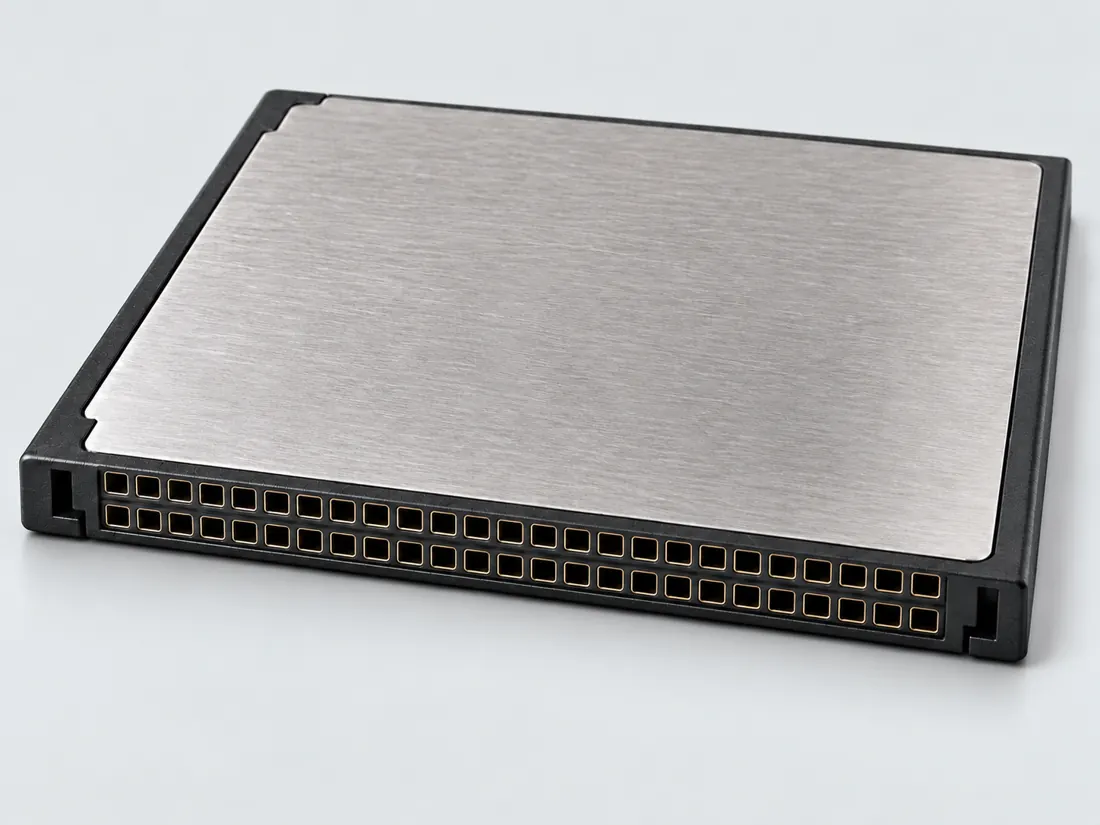
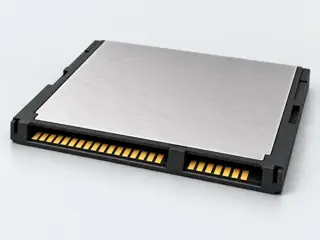
Three-quarter view Computer-generated illustration with prior AI visual review. Not a photograph, measurement or compatibility check. Independent technical and rights review pending.
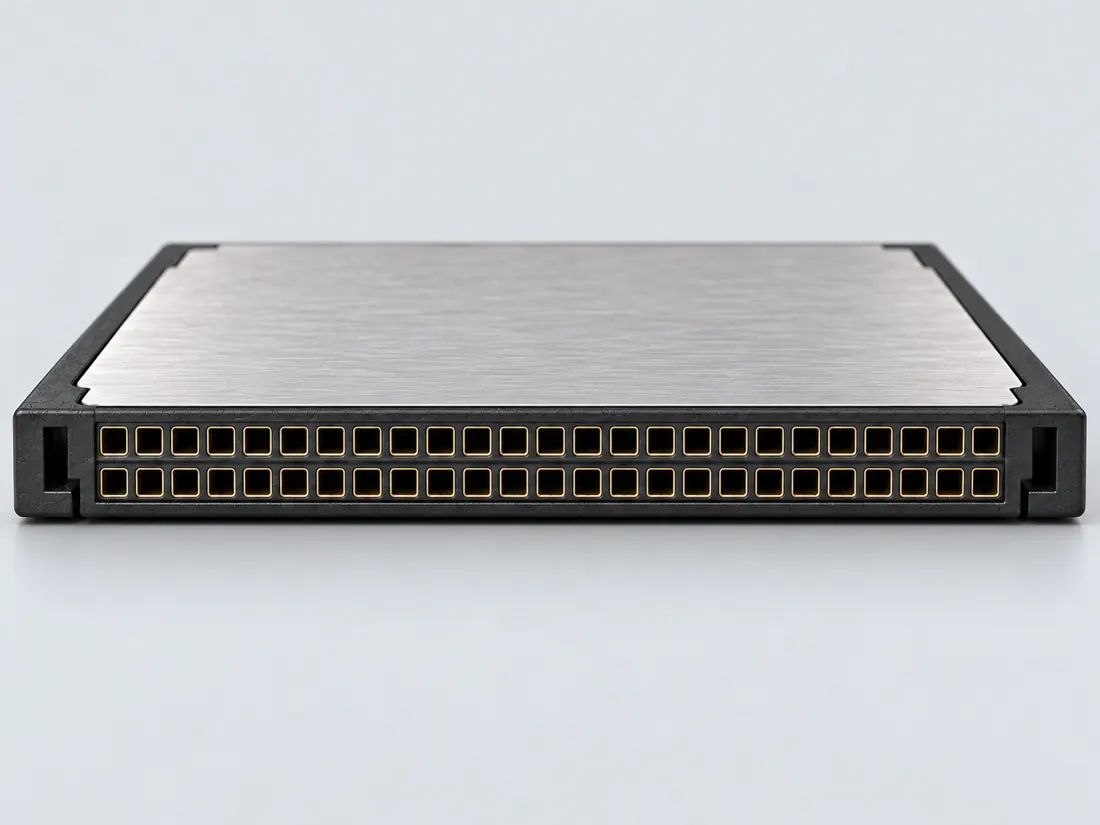
Mating face Computer-generated illustration with prior AI visual review. Not a photograph, measurement or compatibility check. Independent technical and rights review pending.
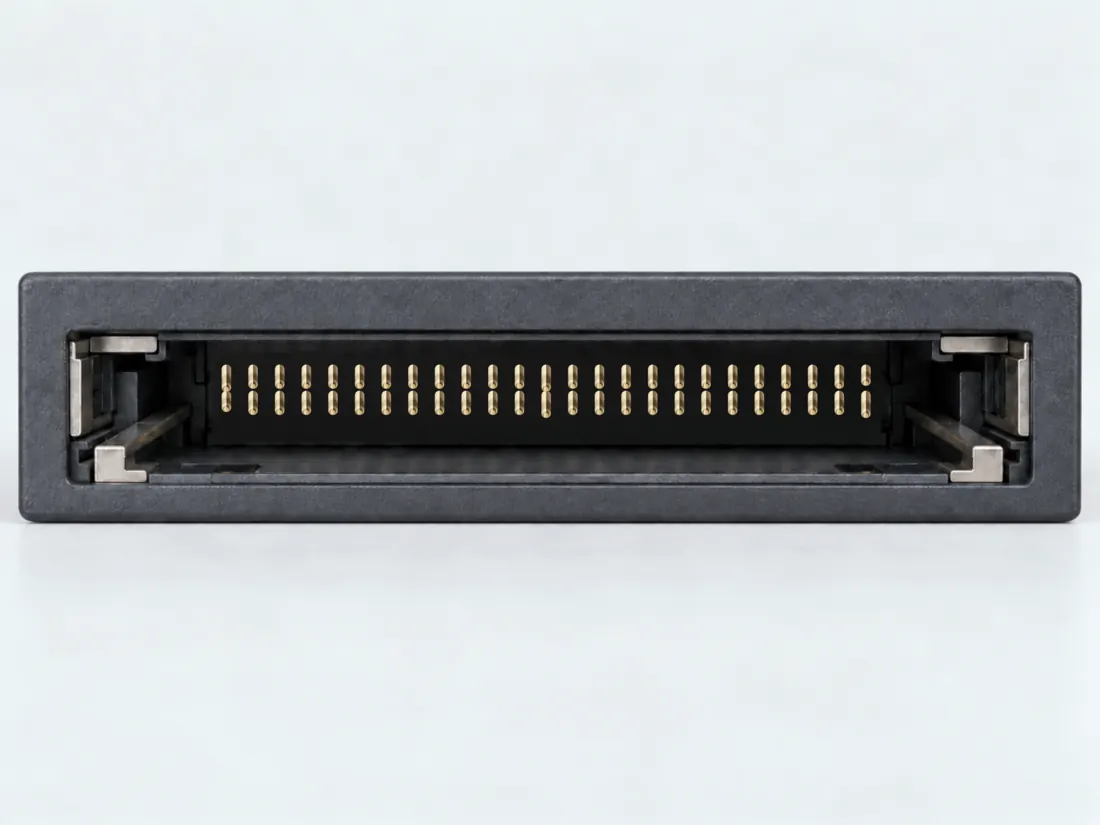
Fitted in place Computer-generated illustration with prior AI visual review. Not a photograph, measurement or compatibility check. Independent technical and rights review pending.
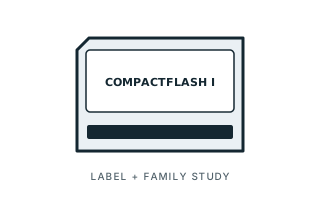
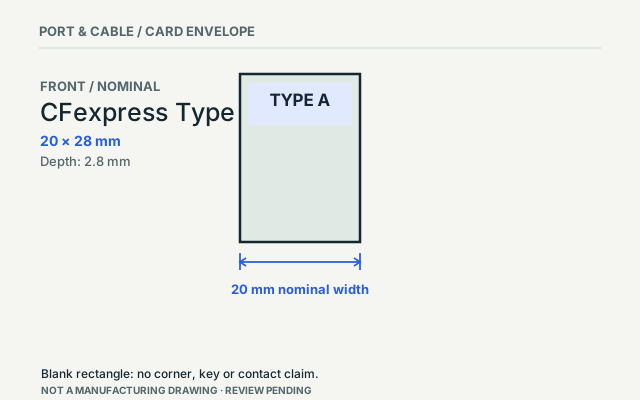
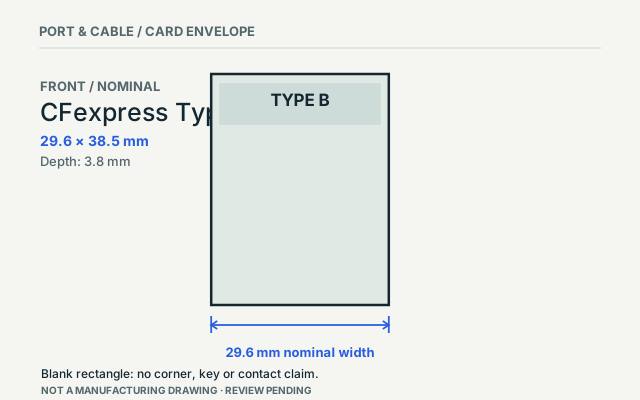
Recognition drawing Original schematic, not to scale. Drawing review pending.
Application notes / Camera media / P119
Does “CF reader” mean CFast or CFexpress too?
FIELD NOTES 04
No. Expand the abbreviation to the full card family, then check the exact reader model. A supported-media entry is more useful than a USB connector or a speed label. C119C · C120A · C120B
Cable or component: documented role and remaining check
Do not insert a different card family to test compatibility.
Source scope · 14 October 2026. Existing RDF8 findings are retained, not newly verified. The current association public page and Delkin interface passage do not replace reader or camera documentation.
Source-qualified reference, not a pinout, compatibility verdict or installation approval. New claims have separate dates; inherited claim dates and review status remain unchanged. No independent technical or rights approval is implied.
C119C (private workspace) — The RDF8 sheets list CompactFlash UDMA7 separately from SD and microSD UHS-I. The named TS-RDF8K2 / TS-RDF8W2 reader examples do not establish CFast or CFexpress support.
Both sheets PDF page 2 Compatibility and Ordering Information; no Type I/II thickness or electrical assignment adopted.
Source interpretation is not independent engineering review, hardware testing, wiring advice or a public-release approval.
Inspect the illustrationLabel-led card symbol · larger view & look-alikes
View Label-led card symbolDepiction Card symbol; interface face not shownSymbol only — not interface geometryNot to scale · independent drawing review pending
Read the view
Read CompactFlash Type I in the written label
Card symbol is upright, with a label block above a dark strip. Neither a mating-face view nor a physical scale is provided.
Label-led symbol — not interface geometry. Read the exact designation and written reference; do not identify a physical connector by this generic shape.
About the marks: The strip is a placeholder, not a contact layout.
What it cannot establish: The dark bar is not a drawing of recessed contacts. Thickness and exact reader support remain unestablished by this symbol.
Enlargement changes display size only. It does not reveal measured geometry, a pin assignment or an approved mating combination.
CompactFlash Type I is a distinct removable-card form; it should not be confused with CFast or CFexpress. [C119A]
The CompactFlash Association identifies CompactFlash with the PATA interface. [C119B]
The RDF8 sheets list CompactFlash UDMA7 separately from SD and microSD UHS-I. The named TS-RDF8K2 / TS-RDF8W2 reader examples do not establish CFast or CFexpress support. [C119C]
Source-scoped identification facts
Each value retains its exact example, role and measurement axis. Facts from different parts must not be combined into an invented component.
Documented examples; not a mating drawing or compatibility approval
Nominal contacts
50S847Fifty-contact interface; recessed contacts may not be visible without a manufacturer illustration.
Connector role
card (TS32GCF800)S920Named source examples retain separate role, part, view and axis limits; values are not a universal family specification. TS32GCF800. Documented role: card. Actual full official2page PDF captured and hashed. Dimensions tuple is explicit, but table does not name width/length axes.; CFA legacy mechanical specifications require non-member purchase; no purchase attempted and no extra pitch/key geometry invented.
Manufacturer
Transcend (TS32GCF800)S920Named source examples retain separate role, part, view and axis limits; values are not a universal family specification. TS32GCF800. Documented role: card. Actual full official2page PDF captured and hashed. Dimensions tuple is explicit, but table does not name width/length axes.; CFA legacy mechanical specifications require non-member purchase; no purchase attempted and no extra pitch/key geometry invented.
Series
CompactFlash800 (TS32GCF800)S920Named source examples retain separate role, part, view and axis limits; values are not a universal family specification. TS32GCF800. Documented role: card. Actual full official2page PDF captured and hashed. Dimensions tuple is explicit, but table does not name width/length axes.; CFA legacy mechanical specifications require non-member purchase; no purchase attempted and no extra pitch/key geometry invented.
Exact part / implementation
TS32GCF800 (TS32GCF800)S920Named source examples retain separate role, part, view and axis limits; values are not a universal family specification. TS32GCF800. Documented role: card. Actual full official2page PDF captured and hashed. Dimensions tuple is explicit, but table does not name width/length axes.; CFA legacy mechanical specifications require non-member purchase; no purchase attempted and no extra pitch/key geometry invented.
CompactFlash Type I card interface facts and limitations
Documented identification
Transcend describes a 50-pin CompactFlash card and explicitly lists Type I support. [C119A]
Important distinction
The CompactFlash Association identifies CompactFlash with the PATA interface. [C119B]
Documented distinction
The RDF8 sheets list CompactFlash UDMA7 separately from SD and microSD UHS-I. The named TS-RDF8K2 / TS-RDF8W2 reader examples do not establish CFast or CFexpress support. [C119C]
Mechanical dimensions
No independently approved mechanical dimensions. Do not use this record for fabrication or fit testing.
Not included. Check exact device and accessory documentation.
A boundary, not an omission to guess around.
Record the exact device model and the label beside the port. Obtain its manual and the accessory documentation. Keep unknown properties unknown instead of filling them from a visually similar item.
Before you connect
What to check
Confirm CompactFlash rather than CFast or CFexpress.
Read the reader supported-card list.
Check capacity and camera support separately from the physical form.
This field note does not approve a connection, publish a pinout or provide a measured template. Use the linked source scope and the checklist as a documentation starting point.
AI-assisted inspection is not independent engineering review. Source scope and access limitations are disclosed below. Procedural checklists are editorial requirements, not hardware measurements.
Locator: Key Features:50-pin CompactFlash to68-pin PCMCIA and TypeI; Compatibility: CompactFlash(TypeI); Order Information:TS0MCF2PC. Access: public page. Adapter's documented support only; no arbitrary device/OS/slot approval, card pinout, measured tolerance, or broad compatibility guarantee. Product photos and certification marks were not copied.
Locator: CFexpress Form Factors; Type A versus Type B; Legacy Standards Access: public page. No copied tables, logos, numeric throughput promises, exhaustive market status or licensed normative specification. Text-only scope.
The RDF8 sheets list CompactFlash UDMA7 separately from SD and microSD UHS-I. The named TS-RDF8K2 / TS-RDF8W2 reader examples do not establish CFast or CFexpress support.
Locator: PDF pages 1–2 visually inspected; card slots, Compatibility, Performance, Ordering Information and three-card insertion wording. No printed revision identifier. Access: public pdf text. Concurrent-operation wording is compared with S440 and remains unresolved. Document age or hardware revision is not inferred from a filename. No measured aggregate transfer, exact-card or OS certification.
Locator: PDF pages 1–2 visually inspected: page 1 Additional Features, page 2 Operating Environment Note and Compatibility. Page 3 multi-product comparison not adopted. Access: public pdf text. Page 1 allows two-card insertion while page 2 says it is unsupported. Kept as an unresolved documentation conflict, not a chosen device capability. Filename is not treated as a verified revision date.
Claim scope: Both sheets PDF page 2 Compatibility and Ordering Information; no Type I/II thickness or electrical assignment adopted.. Next review due 2027-01-06.
Assessment 2026-10-22 · earliest scheduled source review 2027-01-01. This is a recorded-date assessment, not a live source check. Page-level independent review is not established by this panel.
CompactFlash Association · Standards-organization domain · inspected 2026-10-03 · due 2027-01-01
Within inspection window
Scoped support: CF uses PATA; CFast uses SATA; CFexpress uses PCIe/NVMe; Type B and XQD share a form factor but camera support is conditional.
Not established / limitations: No copied tables, logos, numeric throughput promises, exhaustive market status or licensed normative specification. Text-only scope.
Locator: CFexpress Form Factors; Type A versus Type B; Legacy Standards
Scoped support: TS-RDF8K2 / TS-RDF8W2 selected media slots, CompactFlash UDMA7, SD/microSD UHS-I, USB 3.1 Gen 1 description.
Not established / limitations: Concurrent-operation wording is compared with S440 and remains unresolved. Document age or hardware revision is not inferred from a filename. No measured aggregate transfer, exact-card or OS certification.
Locator: PDF pages 1–2 visually inspected; card slots, Compatibility, Performance, Ordering Information and three-card insertion wording. No printed revision identifier.
Scoped support: TS-RDF8K2 / TS-RDF8W2 UHS-II cards at UHS-I speeds and contradictory simultaneous-insertion wording.
Not established / limitations: Page 1 allows two-card insertion while page 2 says it is unsupported. Kept as an unresolved documentation conflict, not a chosen device capability. Filename is not treated as a verified revision date.
Locator: PDF pages 1–2 visually inspected: page 1 Additional Features, page 2 Operating Environment Note and Compatibility. Page 3 multi-product comparison not adopted.
Transcend Information, Inc. · Manufacturer / product-owner domain · inspected 2026-10-21 · due 2027-01-19
Within inspection window
Scoped support: The full manufacturer product page explicitly states the50-pin CompactFlash card interface and TypeI support for this adapter.
Not established / limitations: Adapter's documented support only; no arbitrary device/OS/slot approval, card pinout, measured tolerance, or broad compatibility guarantee. Product photos and certification marks were not copied.
Locator: Key Features:50-pin CompactFlash to68-pin PCMCIA and TypeI; Compatibility: CompactFlash(TypeI); Order Information:TS0MCF2PC.
Trace 3 claims to their source records
C119A · P119
Transcend describes a 50-pin CompactFlash card and explicitly lists Type I support.
Claim scope: Identification and explicitly scoped documentation only; not an end-to-end connection approval
The RDF8 sheets list CompactFlash UDMA7 separately from SD and microSD UHS-I. The named TS-RDF8K2 / TS-RDF8W2 reader examples do not establish CFast or CFexpress support.
Claim scope: Both sheets PDF page 2 Compatibility and Ordering Information; no Type I/II thickness or electrical assignment adopted.
Recorded evidence only. An inspection date, publisher label, source link or generated packet is not independent technical review, hardware testing, fabrication approval or a compatibility verdict.