The useful distinction
Understand the requirement.
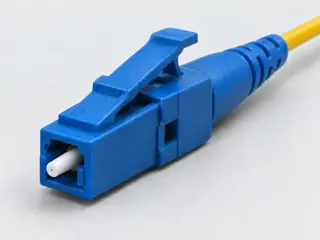
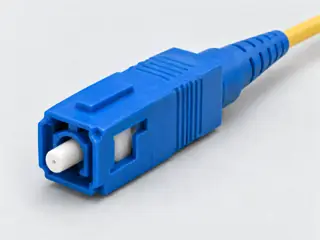
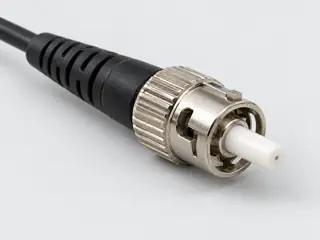
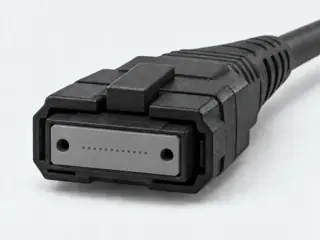
Use exterior labels and manufacturer documentation to identify fiber connections; the housing alone cannot specify the optical system. [C136A]
Fluke MPO documentation treats polarity and pin configuration as separate properties. [C136B]
Fluke distinguishes a radiused UPC endface from an APC endface angled at 8 degrees, and warns that directly mating the two can degrade the connection and damage the endfaces. [C136C]
Fluke separately documents a non-contact CertiFiber Pro input that accepts APC or UPC, with a UPC output and suitable hybrid test cords. [C136D]
Bounded facts, visible unknowns
Specifications and limits
| Documented identification | Cisco warns against viewing energized fibers and inspecting optical connectors with unfiltered magnifiers. [C136A] |
|---|---|
| Important distinction | Fluke MPO documentation treats polarity and pin configuration as separate properties. [C136B] |
| Polish and test-port boundary | Fluke distinguishes a radiused UPC endface from an APC endface angled at 8 degrees, and warns that directly mating the two can degrade the connection and damage the endfaces. [C136C] |
| Polish and test-port boundary | Fluke separately documents a non-contact CertiFiber Pro input that accepts APC or UPC, with a UPC output and suitable hybrid test cords. [C136D] |
| Verified device list | Not included. Check exact device and accessory documentation. |
Record the exact device model and the label beside the port. Obtain its manual and the accessory documentation. Keep unknown properties unknown instead of filling them from a visually similar item.
Before you connect
What to check
- Do not look into optical connectors or use an unfiltered magnifier.
- Keep connector family separate from fiber type, polish, polarity and equipment support.
- Use the equipment documentation; this guide does not authorize cleaning or optical testing.
What is not established
This field note does not approve a connection, publish a pinout or provide a measured template. Use the linked source scope and the checklist as a documentation starting point.
Your next step
Move from the form to the requirement.
The source trail
Evidence for this page
AI-assisted inspection is not independent engineering review. Source scope and access limitations are disclosed below. Procedural checklists are editorial requirements, not hardware measurements.
Cisco warns against viewing energized fibers and inspecting optical connectors with unfiltered magnifiers.
Cisco · Fiber-optic inspection safety boundaries ↗S104: full source recordInspect review dependencies → (private workspace)Fluke MPO documentation treats polarity and pin configuration as separate properties.
Fluke Networks · MultiFiber Pro — MPO documentation ↗S100: full source recordInspect review dependencies → (private workspace)Fluke distinguishes a radiused UPC endface from an APC endface angled at 8 degrees, and warns that directly mating the two can degrade the connection and damage the endfaces.
Fluke Networks · Fluke Networks — APC connector and testing distinctions ↗S422: full source recordInspect review dependencies → (private workspace)Fluke separately documents a non-contact CertiFiber Pro input that accepts APC or UPC, with a UPC output and suitable hybrid test cords.
Fluke Networks · Fluke Networks — APC connector and testing distinctions ↗S422: full source recordInspect review dependencies → (private workspace)