Guide note · not an individual product specification
The useful distinction
Understand the requirement.
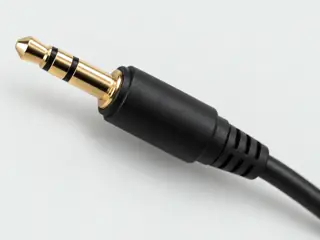
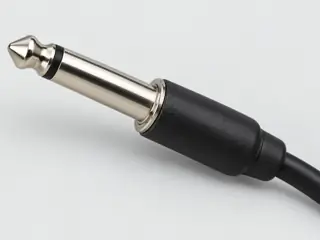
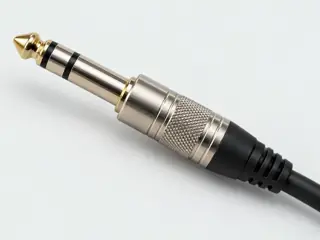
A connector outline does not tell you whether a signal is microphone, line, instrument or stereo headphones. [C149A]
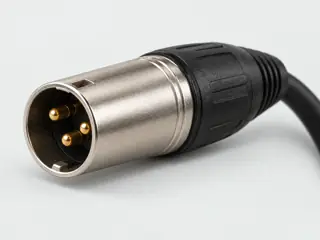
The AT2020 XLR output is balanced microphone-level and has a phantom-power requirement. [C149B]
Bounded facts, visible unknowns
Specifications and limits
Audio connections: identify the signal before the plug facts and limitations
Workflow boundary
Scoped analog audio documentation; not wiring or compatibility approval. [C149A][C149B]
Verified device list
Not included. Check exact device and accessory documentation.
A boundary, not an omission to guess around.
Use the manufacturer’s microphone, line, instrument or headphone designation. The worksheet keeps the selected role separate from the connector form. A physical adapter does not perform every signal-level conversion.
Before you connect
What to check
Identify the exact device and port.
Keep shared channels and controls explicit.
Retain unknown power, mode and cable observations.
A balanced mono line output and a stereo headphone output can use the same outline. Sending stereo into one mono input is not approved here. Splitters, passive summing and amplifier speaker outputs are not modeled.
Keep the missing checks
Exact cable construction, connector gender, gain, current, voltage delivery, grounding and device condition still need appropriate documentation. A matching role is a useful starting point, not a complete connection certificate.
AI-assisted inspection is not independent engineering review. Source scope and access limitations are disclosed below. Procedural checklists are editorial requirements, not hardware measurements.
C149ASource checked · pending review
The Scarlett 2i2 4th Gen documents balanced line outputs and a separate stereo headphone output, both using 6.35 mm TRS sockets.
Locator: Physical and electrical characteristics; output channel order Access: public page. No real gain, impedance matching, isolation or latency prediction.
Locator: Page 1: output description and specification table Access: public pdf text. Historical manufacturer sheet, inspected now; no claim of a 2026 publication. Current draw, wiring and voltage delivery are not modeled.
Computer-generated illustration with prior AI visual review. Not a photograph, measurement or compatibility check. Independent technical and rights review pending.
Assessment 2026-10-22 · earliest scheduled source review 2027-01-01. This is a recorded-date assessment, not a live source check. Page-level independent review is not established by this panel.
Not established / limitations: Historical manufacturer sheet, inspected now; no claim of a 2026 publication. Current draw, wiring and voltage delivery are not modeled.
Locator: Page 1: output description and specification table
Trace 2 claims to their source records
C149A · P149
The Scarlett 2i2 4th Gen documents balanced line outputs and a separate stereo headphone output, both using 6.35 mm TRS sockets.
Claim scope: Exact-model analog audio reference; no end-to-end compatibility or electrical approval.
Recorded evidence only. An inspection date, publisher label, source link or generated packet is not independent technical review, hardware testing, fabrication approval or a compatibility verdict.