FIELD GUIDESource-led reference

P812 / Fiber / Cable / adapter

Cisco CAB-MCP-LC — mode-conditioning fiber patch cord

Recognize the special offset-launch assembly used in documented legacy multimode/LX-LH applications.

Also called Cisco CAB-MCP-LC= historical assembly, OL-7397-03 July2011

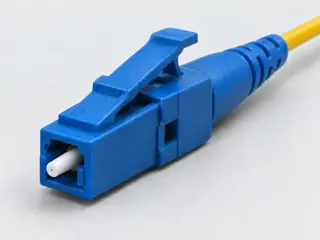
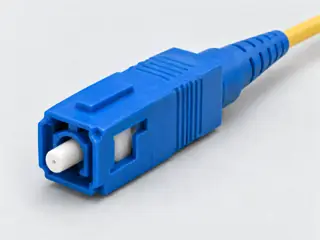
LC-to-SC describes connector forms; mode conditioning describes the internal launch construction.

The useful distinction

Match the complete manufacturer identity, endpoint roles and selected length; a similar shell or cable color is insufficient.

Claim inspection dates: 2026-10-23 · Independent review pending

Cable / adapter note · not an individual product specification

The useful distinction

Understand the requirement.

Recognize the special offset-launch assembly used in documented legacy multimode/LX-LH applications. [C992A]

Bounded facts, visible unknowns

Specifications and limits

Cisco CAB-MCP-LC — mode-conditioning fiber patch cord facts and limitations
Documented task / modeThe guide documents mode conditioning for applicable LX/LH and other listed legacy multimode cases. Do not generalize it to all optical modules or OM3/OM4. [C992A]
Construction / lengthA single-mode fiber is permanently offset-coupled to 62.5µm multimode fiber; duplex LC and SC ends form a purpose-built assembly. 1m CAB-MCP-LC exact historical assembly; the plant's reach is determined by the named transceiver/fiber case. [C992A]
Verified device listNot included. Check exact device and accessory documentation.
A boundary, not an omission to guess around.

A single-mode fiber is permanently offset-coupled to 62.5µm multimode fiber; duplex LC and SC ends form a purpose-built assembly. Do not fabricate the offset splice or look into endfaces. Have trained staff inspect, clean and verify polarity with approved equipment.

Before you connect

What to check

  1. Match the transceiver table, fiber core/category and equipment transmit bore. If any is missing, hold the connection and request the exact module's procedure.
  2. Check condition with power disconnected where the equipment guidance permits; stop for damage, heat or unknown powered connections.
  3. Keep published source support separate from physical test results.
Trace a supported connection class →

Direction and fallback

The conditioned transmit leg has a defined equipment/plant orientation; receive traffic uses the other leg. This is not a symmetric ordinary jumper. The assembly does not convert a single-mode transceiver into an arbitrary multimode-compatible device; select only a documented module/fiber procedure.

Worked selection example

In a legacy link whose exact module guide calls for CAB-MCP-LC with 62.5µm multimode plant, one correctly oriented assembly at each end is part of the documented path; an ordinary LC–SC jumper is not the same construction.

What to observe next

Match the transceiver table, fiber core/category and equipment transmit bore. If any is missing, hold the connection and request the exact module's procedure.

Your next step

Move from the form to the requirement.

The source trail

Evidence for this page

AI-assisted inspection is not independent engineering review. Source scope and access limitations are disclosed below. Procedural checklists are editorial requirements, not hardware measurements.

C992ASource checked · pending review

The guide documents mode conditioning for applicable LX/LH and other listed legacy multimode cases. Do not generalize it to all optical modules or OM3/OM4. No electrical power delivery; laser sources are in the optical endpoints. Follow optical safety guidance. A single-mode fiber is permanently offset-coupled to 62.5µm multimode fiber; duplex LC and SC ends form a purpose-built assembly. 1m CAB-MCP-LC exact historical assembly; the plant's reach is determined by the named transceiver/fiber case.

Cisco · Catalyst 6500 Supervisor Engine Guide, chapter 3 ↗

Locator: pp. 3-18–3-22, Tables 3-2/3-3 and mode-conditioning assembly/installation discussion; p. 3-2 laser warning
Access: public pdf text. CAB-MCP-LC historical exact assembly and documented legacy multimode use. Not current procurement or installation authorization.

S1110: full source recordInspect review dependencies →
Claim scope: Cisco CAB-MCP-LC= historical assembly, OL-7397-03 July2011. Next review due 2027-01-21.

Suggest a correction to this field note →

Evidence behind this page

Scope first. Source second. Approval separate.

1 linked sources · 1 scoped claims · 0 sources with inspection/access flags.

Page scope: content_program_cable_selection

Assessment 2026-10-23 · earliest scheduled source review 2027-01-21. This is a recorded-date assessment, not a live source check. Page-level independent review is not established by this panel.

Inspect 1 source scopes, access limits and dates

S1110 · Catalyst 6500 Supervisor Engine Guide, chapter 3

Cisco · Manufacturer / product-owner domain · inspected 2026-10-23 · due 2027-01-21

Within inspection window

Scoped support: CAB-MCP-LC historical exact assembly and documented legacy multimode use. Not current procurement or installation authorization.

Not established / limitations: CAB-MCP-LC historical exact assembly and documented legacy multimode use. Not current procurement or installation authorization.

Locator: pp. 3-18–3-22, Tables 3-2/3-3 and mode-conditioning assembly/installation discussion; p. 3-2 laser warning

Trace 1 claims to their source records

C992A · P812

The guide documents mode conditioning for applicable LX/LH and other listed legacy multimode cases. Do not generalize it to all optical modules or OM3/OM4. No electrical power delivery; laser sources are in the optical endpoints. Follow optical safety guidance. A single-mode fiber is permanently offset-coupled to 62.5µm multimode fiber; duplex LC and SC ends form a purpose-built assembly. 1m CAB-MCP-LC exact historical assembly; the plant's reach is determined by the named transceiver/fiber case.

Claim scope: Cisco CAB-MCP-LC= historical assembly, OL-7397-03 July2011

Source links: S1110 · Evidence trail →

Prepare this page for review →Read the evidence method →

Recorded evidence only. An inspection date, publisher label, source link or generated packet is not independent technical review, hardware testing, fabrication approval or a compatibility verdict.